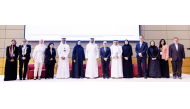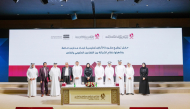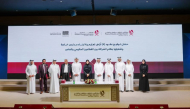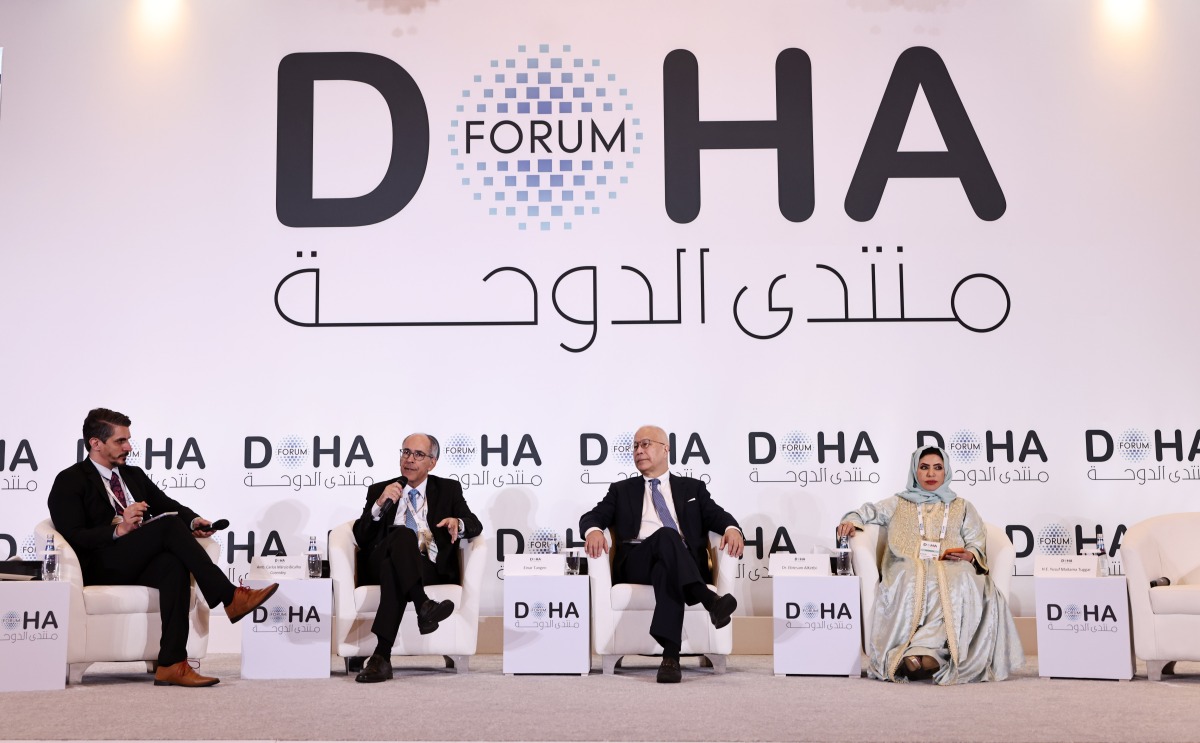
Panelists during the discussion. Pic: Salim Matramkot/The Peninsula
Doha, Qatar: A high-level panel at the Doha Forum explored how shifting global alliances between BRICS and the Gulf Cooperation Council (GCC) are reshaping the geopolitical and economic landscape, signaling what several speakers described as a transition toward a more multipolar world order.
The session, entitled ‘BRICS, GCC, and Evolving Relations for a Changing Global Order,’ convened senior policymakers and geopolitical analysts, including Dr. Ebtesam AlKetbi, President of the Emirates Policy Center, Brazil’s Secretary of Multilateral Political Affairs, H E Carlos Márcio Bicalho Cozendey, Senior Fellow at the Center for International Government Innovation, Einar Tangen, and moderator Dr. Gustavo de Carvalho from the South African Institute of International Affairs.
Speakers highlighted the recent expansion of BRICS, which now includes the UAE, Saudi Arabia, and Egypt, as a pivotal moment in global diplomacy. With additional candidates such as Bahrain, Chile, and Colombia under consideration, the bloc is now emerging as a major political and economic counterweight to traditional Western-led institutions.
Officials discussed ongoing BRICS deliberations over financial alternatives, including talk of a shared currency as a mechanism to reduce dependence on the US dollar in global trade. These conversations tie directly into a broader trend of South-South cooperation and financial diversification.
Brazil’s representative, H E Cozendey, emphasised that the group’s evolution is not about replacing existing systems but complementing them, stating the changing structure of BRICS reflects a broader push for inclusivity in global governance. “BRICS is not a political coalition; it’s a cooperation space. Its members are not required to share the same opinions or positions. Within that space, there are nearly 300 working groups, some already producing concrete results, others still exploratory,” he said.
The panel underscored the growing role of Gulf states as geopolitical intermediaries, linking emerging power centers in Asia, Africa, and Latin America with established Western markets and institutions.
Dr. AlKetbi noted that the GCC’s expanding cooperation with BRICS reflects shared ambitions around investment corridors, technological advancements, and long-term energy transition frameworks, areas where Gulf economies are increasingly assertive actors.
She said, “The accelerating fragmentation of the international system has placed middle powers like my country and other GCC states such as Qatar and Saudi Arabia at the center of global transition.”
Panelists debated whether the growing ties between BRICS and the GCC represent a stable move toward multipolar governance or signal deeper structural fragmentation in the international system.
Einar Tangen argued that what emerges next will depend on the ability of both blocs to institutionalize cooperation, rather than relying solely on political alignment or economic momentum. He stressed, “Everything is shifting downward toward regional groups and middle powers like Brazil, the GCC, China, and others who are increasingly shaping global dynamics.”
As the discussion concluded, speakers agreed that the coming years will define whether these alliances evolve into permanent pillars of global diplomacy or remain informal collectives shaped by shifting geopolitics.
Additionally, the delegates stated that platforms like BRICS are no longer ‘peripheral actors’ but increasingly central to decisions shaping economics, technology, security, and global governance.