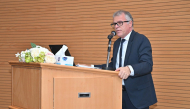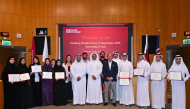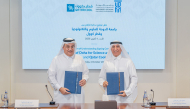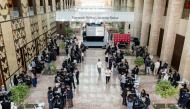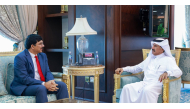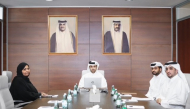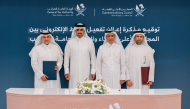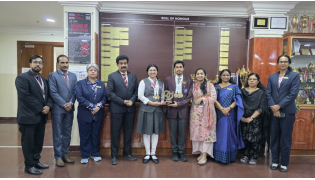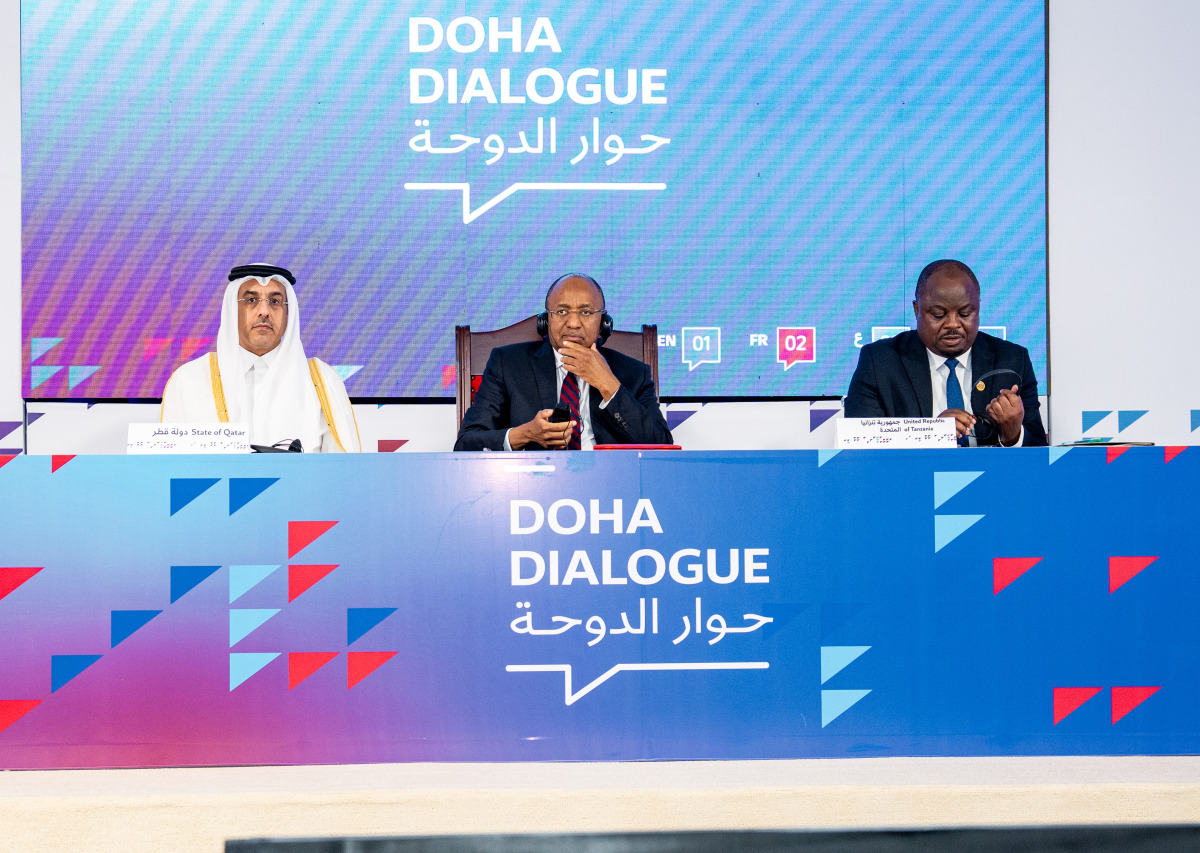
Minister of Labour H E Dr. Ali bin Smaikh Al Marri with other officials during the event.
Doha, Qatar: The Second Doha Dialogue on Labour Mobility got under way in Dar es Salaam, Tanzania, under the theme “From Commitment to Action: Advancing Fair and Sustainable Labour Mobility between Africa and GCC+”.
Hosted by Tanzania on October 5-6, the second edition brings together Ministers of Labour and representatives from more than 33 countries, including GCC, African and Arab countries, alongside representatives of the African Union Commission, the International Labour Organization, the Arab Labour Organization and the International Organization for Migration, as well as experts, academics and civil society representatives.
The opening session was attended by President of Zanzibar H E Dr. Hussein Ali Mwinyi, representing President of Tanzania H E Dr. Samia Suluhu Hassan.
In his opening address, Minister of Labour H E Dr. Ali bin Smaikh Al Marri, welcomed the participating delegations and expressed his appreciation to Tanzania, its leadership, Government and people for hosting the second edition of the Doha Dialogue.
He also commended the efforts of the African Union Commission, the Executive Bureau of the GCC Council of Ministers of Labour and Council of Ministers of Social Affairs, the International Labour Organization and the International Organization for Migration, as well as all partners supporting the Dialogue. The Doha Dialogue on Labour Mobility was launched in Doha in May 2024, bringing together Ministers of Labour and representatives from African and GCC countries, as well as Jordan and Lebanon. The first edition culminated in the adoption of the Doha Declaration on Labour Mobility.
Since its launch, the Dialogue has served as a state-led consultative platform bringing together countries of origin and destination on the basis of partnership and shared responsibility. Labour mobility has a direct bearing on labour-market needs, the lives and livelihoods of millions of workers and their families, and wider economic and social development. The Dialogue therefore provides a platform for addressing shared challenges, exchanging expertise and developing practical solutions that take account of the interests of all parties while upholding workers’ rights.
Dr. Al Marri said the theme of this year’s Dialogue reflected a decisive shift from defining shared principles and priorities to putting them into practice and measuring their impact on the ground. This includes strengthening recruitment regulation, ensuring greater transparency in employment contracts, protecting wages, developing skills pathways and improving access to protection and justice.
He highlighted Qatar’s labour-market reforms, including the abolition of the exit permit requirement for workers, the abolition of the No-Objection Certificate requirement for changing employers, the introduction of a non-discriminatory minimum wage covering domestic workers, and the establishment of Labour Dispute Settlement Committees and the Workers’ Support and Insurance Fund.
He stressed, however, that legislation is only the foundation. Its real impact depends on effective implementation, continuous monitoring and stronger co-operation between countries of origin and destination.
Tanzania's Minister of State in the Prime Minister’s Office for Labour, Employment and Relations, Deus Clement Sangu, said labour mobility had become an increasingly important driver of employment opportunities, skills development, economic growth, labour-market dynamics and social transformation.
He noted that 15,241 Tanzanian nationals had obtained employment in Gulf countries between 2022 and August 2026, across a range of sectors and occupations.