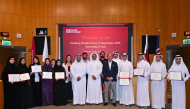
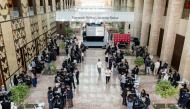
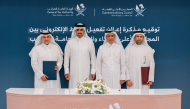
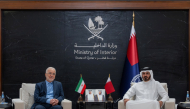
Doha, Qatar: The Ministry of Awqaf and Islamic Affairs and Qatar University have concluded the second edition of the “Quran and Human Knowledge Conference” and the “Kitab Al Ummah Forum” after two days of academic discussions, research and specialised dialogue involving researchers and academics from nine countries.
The events, which concluded yesterday brought together participants from Qatar, Morocco, Algeria, Egypt, Türkiye, Yemen, Oman, Iraq and Sudan, reflecting the growing academic scope of the initiative and its focus on developing knowledge inspired by the Quran.
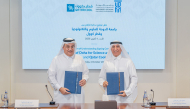
The conference and forum were organised through a partnership between the Ministry’s Department of Islamic Research and Studies and Qatar University’s Ibn Khaldon Center for Humanities and Social Sciences and College of Sharia and Islamic Studies.
The partnership seeks to promote scientific research, establish sound human knowledge and develop intellectual approaches inspired by the Quran while engaging systematically with contemporary intellectual and knowledge-related questions.
The second edition attracted strong academic interest, with the organising committee receiving nearly 2,000 research abstracts after participation opened in October 2025. Following several stages of screening, review and academic evaluation, 17 papers were selected for final presentation.
Held under the theme “It guides to that which is most upright,” the Quran and Human Knowledge Conference examined the role of the Quran in shaping contemporary human and social knowledge and explored ways to bridge Islamic sciences with the social sciences and humanities.
Its discussions covered four main areas: the Quran and philosophy, the Quran and linguistics, the Quran and law, and the Quran and politics. Researchers examined philosophical questions through a Quranic framework, the use of modern linguistic approaches in studying the Quranic text, Quranic foundations of justice and legislation, and political values including consultation, justice and freedom.
In parallel, the second Kitab Al Ummah Forum was held under the theme “Kitab Al Ummah: A Civilisational Project in a Troubled World.” It addressed contemporary Islamic discourse, identity amid globalisation, divine patterns in understanding historical and social change, and the jurisprudence of balancing interests and priorities.
The forum produced recommendations across four strategic tracks covering governance and quality, knowledge and information infrastructure, outreach and capacity building, and scientific production and multimedia publishing.
The recommendations included establishing strategic governance and quality frameworks, developing a knowledge map and integrated digital database, preparing researchers and writers, launching Kitab Al Ummah study programmes and establishing a specialised academy for researchers and writers.
Participants also called for deeper interdisciplinary research linking Islamic sciences with the humanities, social sciences, politics and economics, while encouraging a shift from individual efforts towards collective scholarly work.
The third edition of the conference and forum is scheduled for October 2027, continuing efforts to strengthen Quranic reference in contemporary thought and expand academic and research cooperation regionally and internationally.