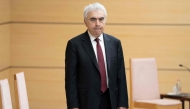
Doha, Qatar: The appointment of Kevin Warsh as Chair of the Federal Reserve comes at a particularly challenging time for monetary policy. At the beginning of the year, the US economy was on a path of steady growth and moderating inflation, with expectations building around a gradual easing cycle of policy rates. However, this trajectory was abruptly disrupted by a sharp escalation in geopolitical tensions.
Following the US-Israeli military campaign against Iran, launched on February 28th, Tehran retaliated by effectively closing the Strait of Hormuz – the waterway through which approximately 20% of the world’s oil and liquefied natural gas (LNG) normally flows. The resulting surge in energy prices pushed US inflation close to 4%, nearly double the 2% target of monetary policy, triggering a reassessment of the outlook.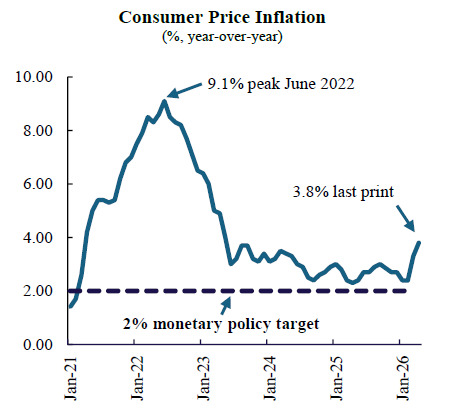 In this context, the policy environment has shifted markedly, with inflation pressures re-emerging, market expectations undergoing a sharp repricing, and key debates intensifying around the appropriate policy framework. In this article, we discuss the main challenges confronting the Federal Reserve under Warsh’s leadership.
First, the outlook for policy rates has shifted significantly since the beginning of the year, reflecting a reassessment of inflation dynamics. At that time, moderating price pressures had led markets to anticipate a gradual easing cycle by the Federal Reserve, even as Chair Jerome Powell faced increasing political pressure from Donald Trump to lower interest rates more aggressively.
However, the surge in energy prices has altered this trajectory, reinforcing upside risks to inflation at a time when underlying price pressures were already proving persistent.
Second, artificial intelligence (AI) introduces a new layer of complexity to the macroeconomic outlook under the new leadership. Warsh has emphasised that technological advances could exert downward pressure on prices by boosting productivity and lowering unit labor costs. In principle, stronger productivity growth could allow the economy to expand without generating inflationary pressures, allowing for lower policy interest rates.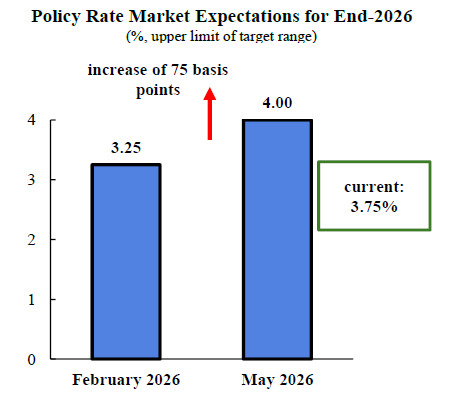 At the same time, the impact of these technologies on employment remains uncertain, as automation may both displace certain jobs and create new sources of labor demand. Thus, a key challenge lies in assessing the magnitude and timing of these effects.
Third, the size and role of the Federal Reserve’s balance sheet represent another key challenge under the leadership of Kevin Warsh.
The Fed’s balance sheet expanded significantly over the past decade as a result of large-scale asset purchases implemented in response to the Global Financial Crisis and the Covid-pandemic, with holdings concentrated in US Treasuries and mortgage-backed securities.
All in all, the outlook for US monetary policy has become more complex, as the new leadership faces renewed inflationary pressures, evolving structural forces, and debates around the appropriate policy framework.
Reflecting these dynamics, market expectations for policy rates have shifted towards a scenario of prolonged restrictiveness, with a likely tightening of 25 basis points by the end of the year, which would raise the benchmark policy rate to 4.00%.