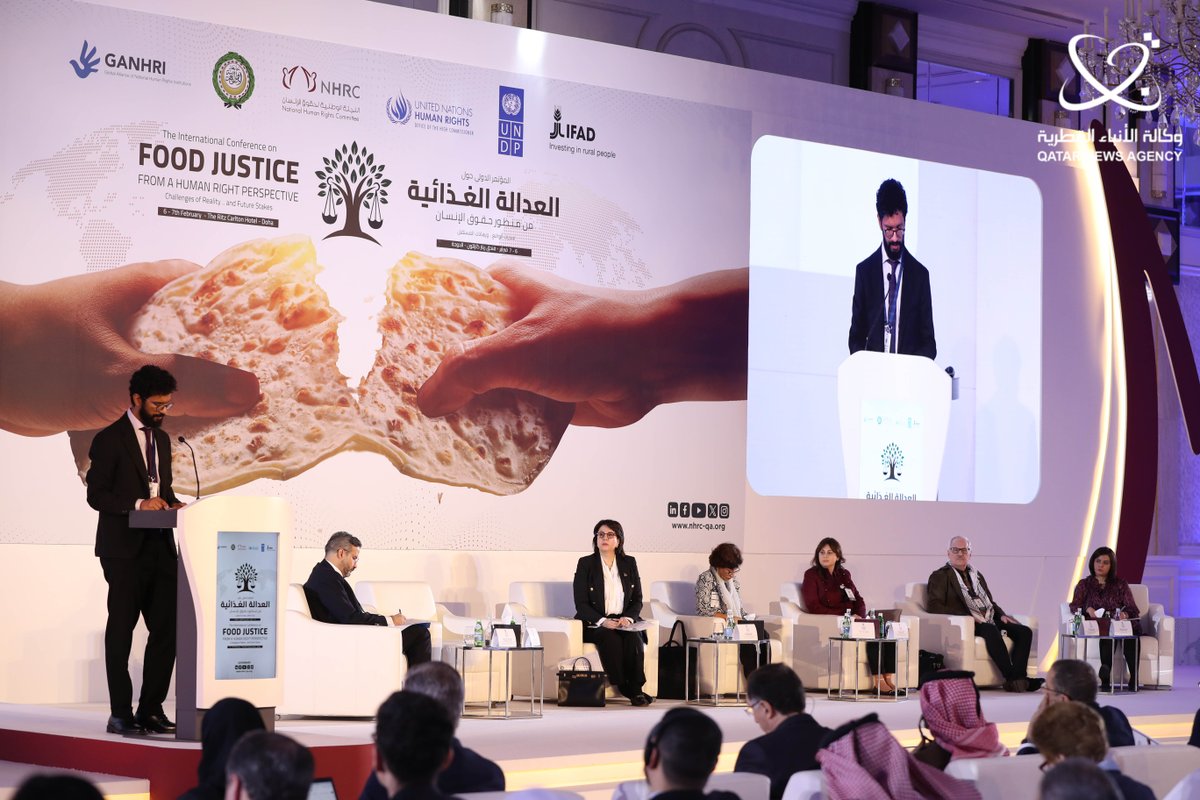
Doha, Qatar: On the sidelines of 1st session of the International Conference on Food Justice from a Human Rights Perspective, legal experts discussed the most prominent international and regional conventions on the right to food and food justice, in addition to delving into the effectiveness of these conventions in meeting their set goals.
The lineup of legal experts participating in the discussions included: Chief of the Middle East and North Africa Section at the Office of the United Nations High Commissioner for Human Rights (OHCHR) Mohammad Ali Alnsour, Human Rights officer at the UN Committee on Economic, Social, and Cultural Rights (CESCR) Chafik Ben Rouine, and Minister Plenipotentiary, Deputy Director of Human Rights Department at the Secretariat General of the Arab League Zubaida Ziani.
Participants in the session also included: Professor at James P Grant School of Public Health (JPGSPH) of BRAC University Dr Kaosar Afsana, Head of the International Committee of the Red Cross (ICRC) mission in Qatar Basma Tabaja, expert at Housing and Land Rights Network (HLRN) Joseph Schechla, and Mais Alatiyat of the United Nations Development Programme.
The session reviewed a number of working papers that tackled the topics of diplomacy as means to implement the right to food, the challenges and opportunities regarding food justice in the Arab world, the perspective of Human Rights regarding the right to food and food justice, in addition to the conventions on international and internal armed conflicts and occupation, as well as regional and international right to food and food justice instruments and their effectiveness.
The experts called on civil society organizations to solidify food safety and to provide fishermen and farmers with support and job security, in addition to upholding controls and accountability mechanisms, stressing that food is not just means to survival, but also a celebration of life, with various international law instruments recognizing the human right to adequate food.
Participants highlighted that the international community has repeatedly stressed the importance of universal access to food and achieving food justice, especially since there are hundreds of millions of people suffering from hunger, noting that this is caused by several challenges such as climate and economic changes, in addition to wars that utilize starving as a means of continuing conflicts.