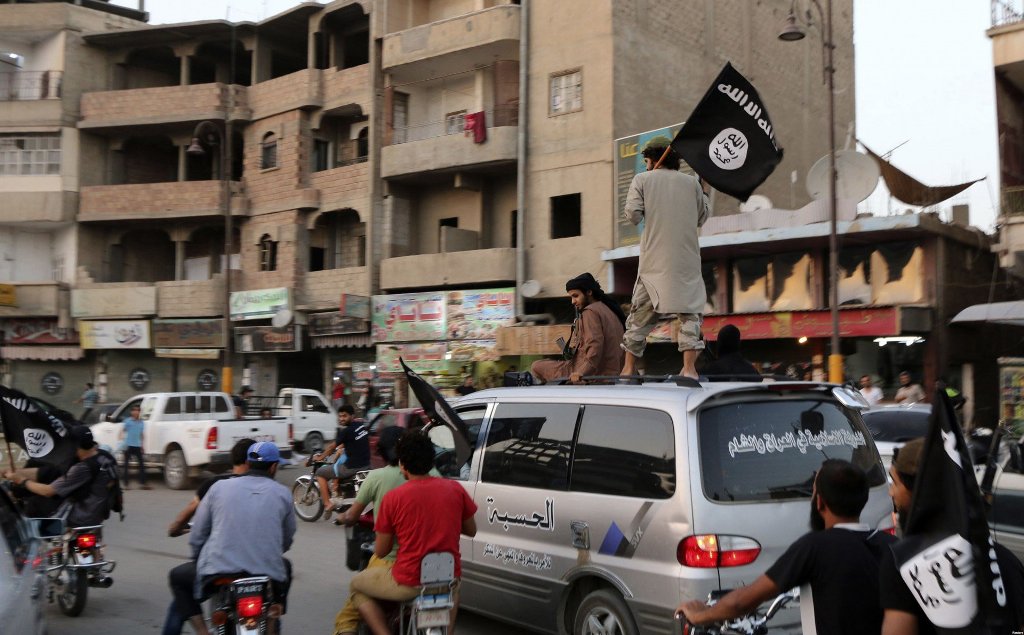
Beirut: Raqqa is the de facto Syrian capital of the self-styled "caliphate" declared by the Islamic State group in mid-2014 and now the target of a US-backed offensive.
The Kurdish-Arab Syrian Democratic Forces (SDF) alliance announced the start of a long-awaited operation to capture Raqqa on Sunday.
Seized by jihadists
Raqqa was home to some 240,000 residents before Syria's civil conflict broke out in 2011 and more than 80,000 people have fled to the city from other parts of the war-torn country.
On the Euphrates River and near the Turkish border, Raqqa in March 2013 became the first provincial capital in Syria to fall into the hands of rebels, at the time the Al-Nusra Front, Al-Qaeda's then-affiliate in the country.
But tensions soon erupted into clashes between Al-Nusra and fellow jihadists of a precursor of IS.
On January 6, 2014, all-out war broke out between the rival groups before IS's predecessor seized control of the whole city.
Five months later, Mosul in Iraq fell to the jihadists and IS chief Abu Bakr al-Baghdadi, in a June 29 address at a mosque in Iraq's second largest city, proclaimed a "caliphate" straddling Iraq and Syria.
IS imposed Islamic dress code in schools and attacked churches in Raqqa as they instigated a rule of terror marked by kidnappings and public beheadings.
'Hell Square'
The city remains the scene of IS's worst atrocities, such as the stoning to death of a woman accused of adultery and the killing of homosexuals by throwing them from rooftops.
IS started using a roundabout called Heaven Square for gruesome public executions, earning it the new name of "Hell Square".
Human heads have been displayed on spikes at the central roundabout and bodies have hung for days to terrorise residents, local anti-IS activists have said.
Activists from the group Raqqa is Being Slaughtered Silently were among IS's first targets in Raqqa, but they have continued to work, providing a rare window into life in the IS bastion.
The main square in Raqqa is the venue for a trade in sex slaves, in particular kidnapped Yazidi girls, and where opponents are tortured to death.
In a rigid interpretation of Islamic laws, the jihadists in Raqqa have imposed strict bans on cigarettes as well as alcohol, while forcing men not to shave their beards and women to wear the niqab face veil.
The group has taken over all levels of civil administration, rewriting school curriculums, establishing Islamic courts and creating police units to implement Islamic law.
- Foreign fighters -
Shops are also regulated, with only married couples allowed to go shopping together and mannequins in store fronts banned.
Thousands of foreign jihadists have flowed from Turkey into Raqqa, 550 kilometres (340 miles) northeast of Damascus, and Western intelligence services say the city has served as the base for planning attacks abroad.
The foreign fighters have enjoyed special perks in Raqqa, which has been an occasional source of tension with Syrian residents who say they are treated as inferior.