Doha, Qatar: Researchers have underlined true political representation as key to bridging the gap between Muslim societies and their governments during an ‘Oasis of Dialogue’ session organised by the QatarDebate Center in Washington. Participants explained that Muslim communities have sought democracy and diversity within Islamic societies while pursuing answers to challenge Islamophobia.
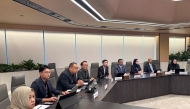
This was disclosed during a panel discussion held by the Center under “Bridging the Gap: Muslim Communities and Governments”. The meeting brought together experts, researchers, and academics collaborating with the “Islam and Muslims” initiative, the Center’s strategic partner.
The session is the sixth in a series launched by QatarDebate to disseminate knowledge and bridge the gap between Muslim communities and their governments by delving deeper into contemporary issues. It was moderated by the Center’s Qatari Ambassador, A. Mohammed Al Lakhan Al Marri, a Qatar University faculty member and a political science doctoral candidate at the University of California - Riverside.
Discussions touched on several sub-themes, namely Islamic public opinion, understanding the relationship between Islamic governments and their citizens, the compatibility of government resolutions with public opinion, and cases in which governments’ actions conflict with the aspirations of Muslim societies.
Linda Sarsour, former Executive Director of the Arab American Association in New York, noted the importance of supporting Arab communities and others around the world to better plan the democratic transformation gradually, overcome potential negatives and work on developing solutions. Participants also discussed the challenges facing Muslims in the US, especially those relating to identity and religion, and policies that mainly affect them, such as immigration.
Dr. Trita Parsi, an expert in Iranian affairs and professor of international politics at Johns Hopkins University, stressed the importance that communities demand their full rights and have the political awareness to make their voices heard.