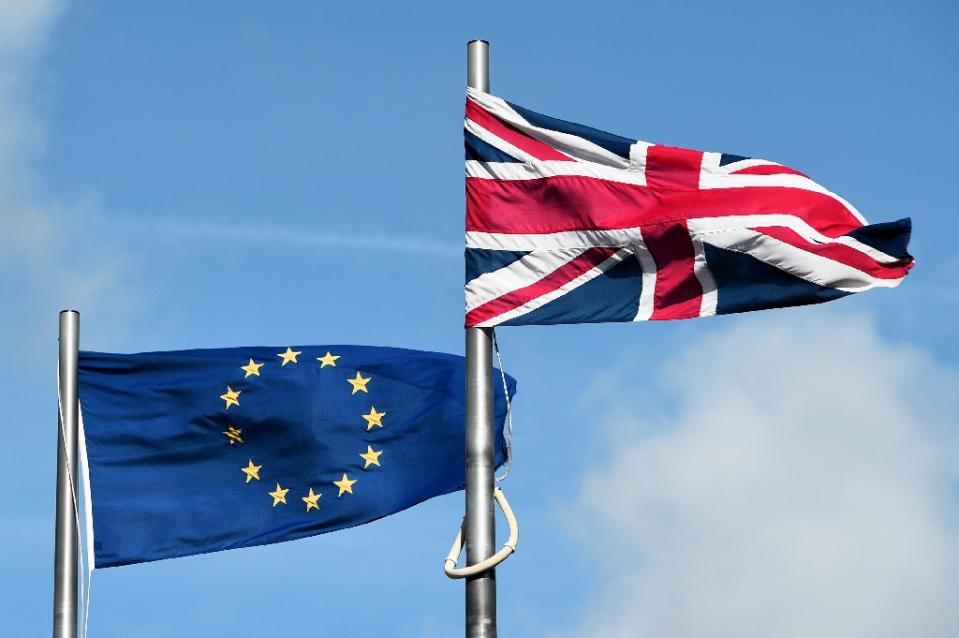
LONDON: It will be up to British voters on June 23 to decide whether the country stays in the European Union, but international bodies and foreign leaders have joined the debate, mostly to urge the country not to the leave the bloc.
Below is a summary of comments ranging from institutions such as the International Monetary Fund to China’s premier.
U.S. PRESIDENT BARACK OBAMA
Obama told Britain on April 22 that it would go to “the back of the queue” for trade talks with Washington if it left the EU. He combined the blunt warning with praise for Britain’s influence within the 28-nation bloc, something Washington considered important to its own interests.
U.S. Democratic presidential front-runner Hillary Clinton also wants Britain to stay in the EU.
U.S. REPUBLICAN PRESIDENTIAL CANDIDATE DONALD TRUMP
Trump said on May 5 that Britain would be better off outside the EU because of high levels of migration. “I think the migration has been a horrible thing for Europe. A lot of that was pushed by the EU. I would say that they’re better off without it personally, but I’m not making that as a recommendation - just my feeling,” he told Fox News.
JAPANESE PRIME MINISTER SHINZO ABE
Abe used a visit to London on May 5 to warn Britain that a vote to leave the EU would make Britain less attractive for Japanese investors. “Japan very clearly would prefer Britain to remain within the EU,” he said “Many Japanese companies set up their operations in the UK precisely because the UK is a gateway to the EU ... A vote to leave would make the UK less attractive as a destination for Japanese investment.”
GERMAN FINANCE MINISTER WOLFGANG SCHAEUBLE
Schaeuble said on March 3 it would be extremely difficult or even impossible for Britain to negotiate a “special deal” on trade with the EU if it left the bloc. “Imagine the negotiations that would have to take place after a Brexit decision. For the years to come all this bureaucratic stuff. Good luck!” he said.
FRENCH ECONOMY MINISTER EMMANUEL MACRON
Macron said on April 15 that Britain would need to continue to pay into the EU budget if it wished to continue with tariff-free access to the bloc’s single market after a Brexit.
“Those who pretend that passporting will be preserved exactly following the same rules without any contribution to the budget, are making a big, a big mistake,” Macron added.
INTERNATIONAL MONETARY FUND
The global economy watchdog made an unusual incursion into a national political issue on April 12 when it said a Brexit could “do severe regional and global damage by disrupting established trading relationships.”
ORGANISATION FOR ECONOMIC CO-OPERATION AND DEVELOPMENT
The OECD said Britons would face a “Brexit tax” if they left the EU, equivalent to a month’s salary by 2020, given the likely hit to the economy. Its secretary general urged Britons to think carefully about how they would fare outside the 28-country bloc. “Britain, look at yourself in the mirror, naked. Do you like what you see? Mostly I hope you come out saying: not too much,” Angel Gurria said.
CHINESE PREMIER XI JINPING
China, which is sensitive to comments from abroad and usually does not talk about other countries’ domestic affairs, issued a veiled call on Britain to stay in the EU when its leader Xi Jinping visited the country in October. “China hopes to see a prosperous Europe and a united EU, and hopes Britain, as an important member of the EU, can play an even more positive and constructive role in promoting the deepening development of China-EU ties,” he said.
DALLAS FEDERAL RESERVE PRESIDENT ROBERT KAPLAN
Kaplan told reporters in London that uncertainty about Brexit could affect whether the Fed raised rates for the first time since December at its June 15 meeting.
He said: “There is no question that if it were to occur, it would open up potential tail risk, including the sudden or rapid depreciation of the currency which might in fact have ripple effects in other countries.”
GROUP OF 20 ECONOMIES
Finance ministers and central bank governors from 20 of the world’s leading economies put Brexit on their list of dangers to the world economy when they met in February. G20 officials said Brexit was added on the insistence of Britain.
SILENT SO FAR
Supporters of Britain remaining in the EU have said that a decision to split the bloc would be welcomed by Russian President Vladimir Putin as a weakening of the West. So far, Putin has not commented on the Brexit debate.
“Russia is being dragged into the domestic debate on Brexit,” the Russian embassy in London said in a statement in March. “Why is the ‘wicked Russia’ thesis used to explain a government policy?”
In Brussels, European Commission economists have been banned from researching the impact of Britain leaving the bloc, or even talking about it publicly, for fear of getting embroiled in the debate, officials have said.
(Writing by William Schomberg; editing by Stephen Addison)
Reuters