.jpg)
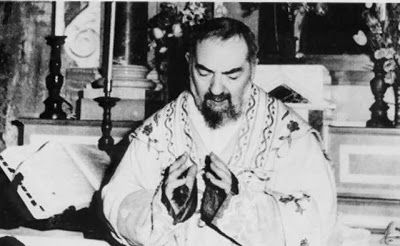
Vatican City: The embalmed corpses of two Catholic saints, including that of the venerated Italian friar Padre Pio, went on display in St Peter's basilica on Friday after being paraded through nearby streets in transparent coffins.
Nearly half a century after this death, the body of Padre Pio was moved for the first time from its resting place in a sanctuary at San Giovanni Rotondo in southern Italy.
It has been brought to the Vatican at the request of Pope Francis as part of events to mark the ongoing Catholic Jubilee Year.
Pio was revered during his lifetime (1887-1968) and his popularity has continued to grow since his death, particularly in Italy, where mini-statues and pictures of the mystical Capuchin friar are ubiquitous.
He was accompanied on the trip to St Peter's by another Saint Leopold Mandic (1866-1942), a Croatian Capuchin who was, like Pio, celebrated for his skill in receiving confessions - a quality Francis wants to champion during the Jubilee year.
Cesarina Onesi, 74, was among the thousands of faithful who turned out to accompany the coffins on the final leg of their journey to St Peter's said she had been very moved by the experience.
"I pray to him (Pio) every night, he is one of the four or five saints I pray to. He was a great man, so much faith, so much courage, so much humanity."
Canonised under Pope John-Paul II, Pio's brand of popular, mystical Catholicism was less popular with the Vatican authorities when he was alive.
He regularly recounted having experienced both heavenly and diabolic visions, other clerics claimed to have witnessed him levitating in ecstasy and he was frequently associated with apparently miraculous recoveries among the seriously ill.
From the age of 31 until the end of his life he regularly presented with stigmata - body marks corresponding to the wounds Jesus Christ received during his crucifixion, according to biblical accounts.
One sceptic wrote a book suggesting Pio maintained his wounds with acid while a prominent doctor theorised that he suffered from a rare form of haemophilia.
While Pio was regarded with suspicion by popes John XXIII and Paul VI, he was admired by Polish pope John Paul II, who confessed to the friar when he was a young priest.
And Francis has further promoted the veneration of Padre Pio, encouraging the creation of prayer groups dedicated to him when he was archbishop of Buenos Aires.
Pio's legend was further enhanced after his death when, in 2008, his body was exhumed from his crypt to be put on display and was allegedly found to be in remarkably good condition.
There were however no signs of any stigmata and his skull had become exposed, which resulted in a silicon face mask being made for him.
The corpses of the two saints will be on display in St Peter's until February 11.
AFP