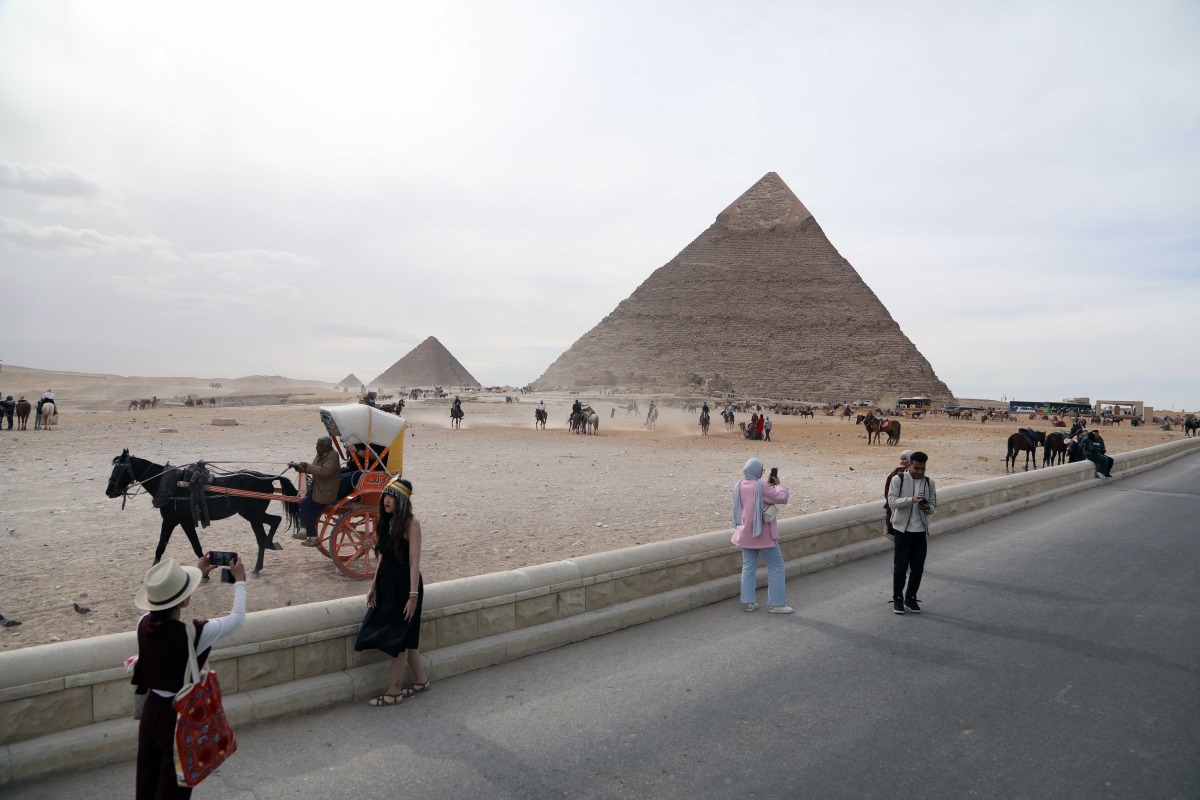
For representational purposes only. This photo taken on Jan. 1, 2026 shows tourists visiting the Pyramids of Giza in Egypt. (Xinhua/Ahmed Gomaa)
Cairo: Egyptian archeologists have uncovered the remains of a Byzantine-era (330-641) monastic compound in Upper Egypt's Sohag province, shedding new light on organized monastic life in the region during the Byzantine period of late antiquity, the Ministry of Tourism and Antiquities said in a statement on Tuesday.
The archeological mission of the Supreme Council of Antiquities (SCA) uncovered rectangular mudbrick buildings extending from west to east, with dimensions ranging from about 8×7 meters to 14×8 meters.
The structures include rectangular halls, some containing apse-like niches used for worship, as well as small vaulted rooms believed to have served as monastic cells or spaces for worship.
Some structures also featured southern courtyards containing entrances, alongside the remains of small circular buildings believed to have been used as communal dining areas for the monks, according to the statement.
SCA Secretary-General Mohamed Ismail Khaled highlighted the importance of the discovery, saying it "adds new information that contributes to understanding the nature of monastic life in Upper Egypt during the Byzantine period."
He noted that excavation results reveal an organized pattern of settlement and daily life within the uncovered buildings, suggesting they once served as residences for a fully integrated monastic community.
Tourism and Antiquities Minister Sherif Fathy said the discovery "embodies the richness and diversity of Egypt's cultural heritage across different eras."
Some other archeological artifacts were also unearthed at the site, including storage amphorae, ostraca inscribed in the Coptic language, various daily-use tools, stone fragments representing parts of architectural elements, as well as limestone panel fragments carved with Coptic inscriptions.
The Byzantine period in Egypt, also known as Byzantine Egypt, covers the late Roman era from 330 AD until the Arab conquest in 641 AD, an era when Christian monasticism flourished, according to the Egyptian Ministry of Tourism and Antiquities.