Doha, Qatar: In a sign of robust economic vitality, Qatar’s population reached 3,214,609 by the end of December 2025, marking a 2.3% increase from the previous year, according to the latest figures released by the National Planning Council (NPC).
This growth, while moderate compared to the nation’s demographic shifts, underscores Qatar’s ongoing appeal as a global hub for talent and investment.
The NPC’s monthly bulletin highlighted the year-on-year rise from an estimated 3,142,335 residents in December 2024.
This 2.3% uptick represents a stabilisation after years of dramatic swings. Historical data from sources like Macrotrends show Qatar’s population growth rate averaged 6.83% from 1961 to 2024, peaking at 21.7% in some years but dipping to -10.93% in 2021 amid the global pandemic.
The 2022 FIFA World Cup catalysed a surge, with growth hitting 5.91%.
Post-event, 2023 saw a slight contraction of -0.05%, reflecting repatriations, but recovery ensued with 7.32% growth by early 2025 estimates.
Experts attribute the 2025 increase to a confluence of economic drivers. Qatar’s liquefied natural gas (LNG) sector, the backbone of its economy, continues to expand with projects like the North Field expansion, demanding skilled labour from South Asia, the Philippines, and beyond. Diversification efforts under the Qatar National Vision 2030 (QNV 2030) have fuelled growth in non-hydrocarbon areas, including technology, tourism, and finance.
Qatar is expected to be one of the fastest-growing economies in the region this year, with real GDP growth forecast to reach 5.2 percent, driven by rising liquefied natural gas (LNG) capacity, stronger export performance, and sustained diversification-related investment, according to Fitch Solutions’ latest MENA Macro report.
Tourism has rebounded post-World Cup, with initiatives like the Hayya platform drawing visitors, while free zones in Ras Bufontas and Umm Alhoul lure businesses and their employees.
Aligned with QNV 2030, launched in 2008, this growth supports the vision’s pillars: human, social, economic, and environmental development.
The plan envisions an “advanced society capable of achieving sustainable development” by fostering an environmentally aware population, promoting family values, and empowering women.
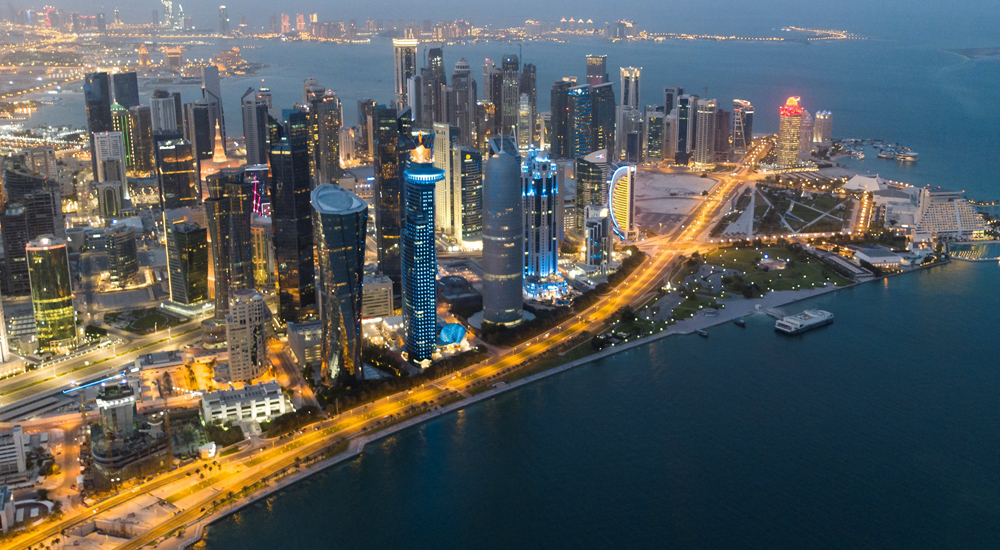
Urban planning under QNV emphasises efficient population distribution, with developments like Lusail City accommodating newcomers while preserving cultural heritage.
However, rapid expansion brings hurdles. Infrastructure strains, including water scarcity and housing demands, require vigilant management.
The NPC’s strategy includes agile urban policies to mitigate these, ensuring high living standards. Economically, the World Bank notes resilient balances despite fiscal pressures, with non-hydrocarbon sectors driving momentum.
Euromonitor forecasts a 19.5% rise by 2030, potentially reaching 3.8 million, fuelled by migration and natural increase. Yet, sustainability remains key, as emphasised in QNV 2030’s call for preserving natural heritage.
As Qatar navigates this demographic evolution, the 2025 figures signal not just numbers, but a nation poised for continued prosperity. With strategic policies in place, the Pearl of the Gulf is set to shine brighter, blending tradition with global ambition.