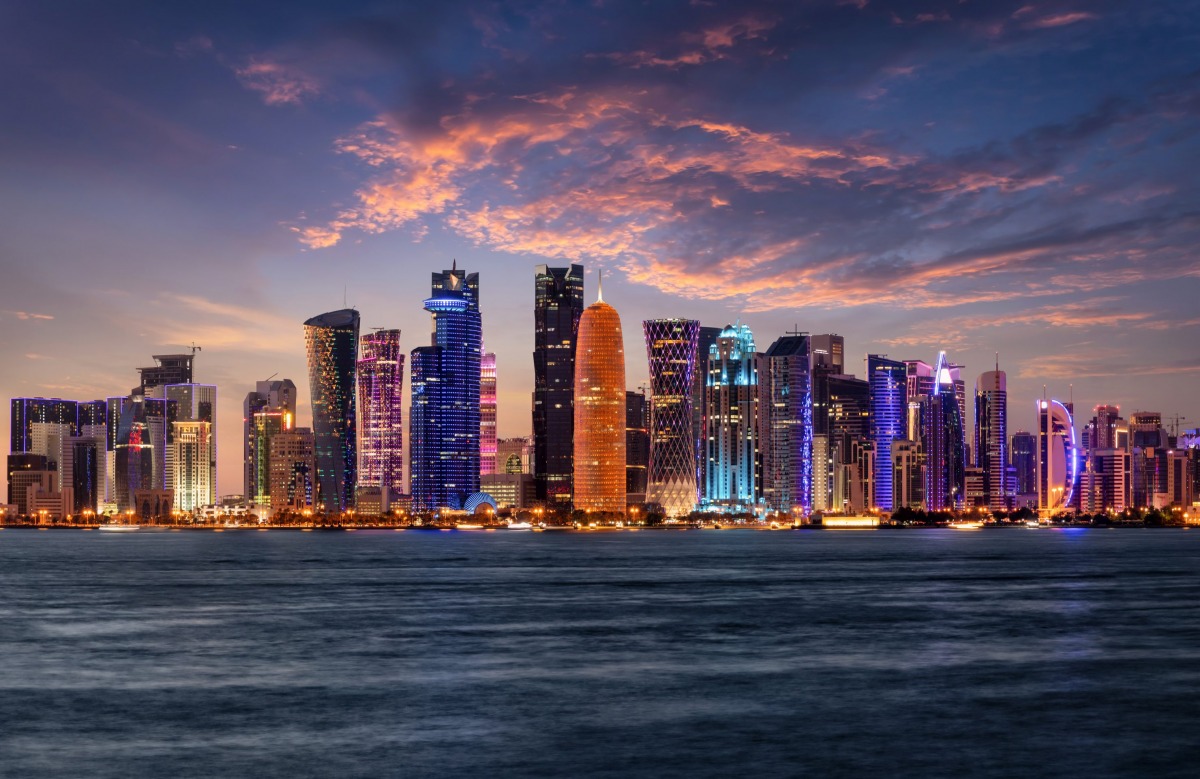
Doha, Qatar: Qatar’s investment market is expected to expand steadily in 2026, defying broader regional disruptions as strong economic fundamentals, ongoing state-backed projects, and investor-friendly reforms continue to attract both local and international capital.
According to a recent report by Mordor Intelligence, the country’s investment opportunities market is projected to reach $74.37bn (QR270.56bn) in 2026, up from $70.54bn (QR256.63bn) in 2025, and is expected to climb further to $96.92bn (QR352.60bn) by 2031, reflecting a compound annual growth rate (CAGR) of 5.43 percent.
The report attributes this growth to the continued rollout of Qatar’s $225bn ($818.55bn) capital pipeline under Qatar National Vision 2030, in addition to accelerating digital transformation across sectors.
Public-sector investment remains the backbone of the market, but recent policy reforms are increasingly drawing foreign capital. Liberalised foreign ownership rules and a $1bn incentive programme are helping to channel international investment into the economy at a faster pace.
Industry experts told The Peninsula that Qatar’s consistency in policy and long-term planning continues to set it apart in a region often marked by volatility.
Mohammed Sohail, an investment analyst and market strategist familiar with GCC markets, noted that the country’s positioning is becoming clearer.
“What distinguishes Qatar right now is its ability to offer both security and growth, he said. “While many markets force investors to choose between stability and returns, Qatar is increasingly delivering both, particularly through energy expansion and infrastructure-linked opportunities.”
The government’s openness to dialogue and ongoing reforms is also seen as a critical factor. Investors point to improved accessibility, streamlined processes, and a proactive approach to attracting foreign direct investment.
Irina Duisimbekova, co-founder of Licorne Gulf, emphasised that predictability is a key factor for investors.
“Even during periods of geopolitical uncertainty, the country does not deviate from its long-term vision. There is a clear sense of direction, driven by Qatar National Vision 2030, and this creates reassurance for investors like us,” she said. “In uncertain times, investors are not only looking for returns, but they are looking for predictability, and Qatar delivers that.”
Duisimbekova remarked that Qatar is viewed as a regional safe haven for capital.
She said, “Qatar is increasingly positioned as a safe and strategic entry point into the region. This is not just a perception; it is based on fundamentals. Qatar combines political stability, strong financial reserves, and a very solid regulatory framework.”
Market observers note that Qatar’s combination of economic resilience, regulatory openness, and liquidity is strengthening its appeal among global investors navigating uncertain macroeconomic conditions.
While public spending remains a central driver, the increasing role of foreign investment signals a shift toward a more balanced and globally integrated market.
“For global investors navigating uncertainty, Qatar offers a rare balance: security, liquidity, and opportunity in one market,” Duisimbekova added.
With strong fundamentals and a clear strategic direction, Qatar appears well-positioned to sustain investor confidence and capitalise on long-term growth opportunities throughout the decade.