
Stepanakert, Azerbaijan: Clashes between Azerbaijanis and Armenian forces killed at least 13 people Monday in a third day of fighting over Nagorny Karabakh, as Turkey fuelled tensions following the worst violence in decades over the disputed territory.
Russia and the West have scrambled to call for an end to the fighting but Turkish President Recep Tayyip Erdogan, a firm ally of Azerbaijan, insisted that the Armenian-controlled region would "one day" return to Baku's control.
On the ground, the death toll since fighting erupted on Friday night rose to 46 after Armenia's defence ministry said five Armenian "volunteer" fighters were killed when a bus they were travelling in was hit.
Earlier the Armenia-backed separatist authorities in Karabakh -- which claims independence but is supported by Yerevan -- said three civilians and two more soldiers were killed in fierce shelling.
Baku said three of its troops were killed overnight when Armenian forces shelled its positions using mortars and grenade launchers.
Azerbaijan has claimed to have captured several strategic positions inside the Armenian-controlled territory -- internationally recognised as part of Azerbaijan -- in what would be the first change in the frontline since an inconclusive ceasefire ended a war over the region in 1994.
Armenian President Serzh Sarkisian said Monday that a "ceasefire would only be possible if the militaries of both sides return to the positions" they held prior to the outbreak of hostilities.
His comment came a day after Azerbaijan announced a unilateral truce that failed to stop the fighting.
Azerbaijan's Defence Minister Zakir Gasanov instead ordered the army Monday to be ready to strike Karabakh's capital Stepanakert "in case of continued Armenian bombardment of civilian targets in Azerbaijan."
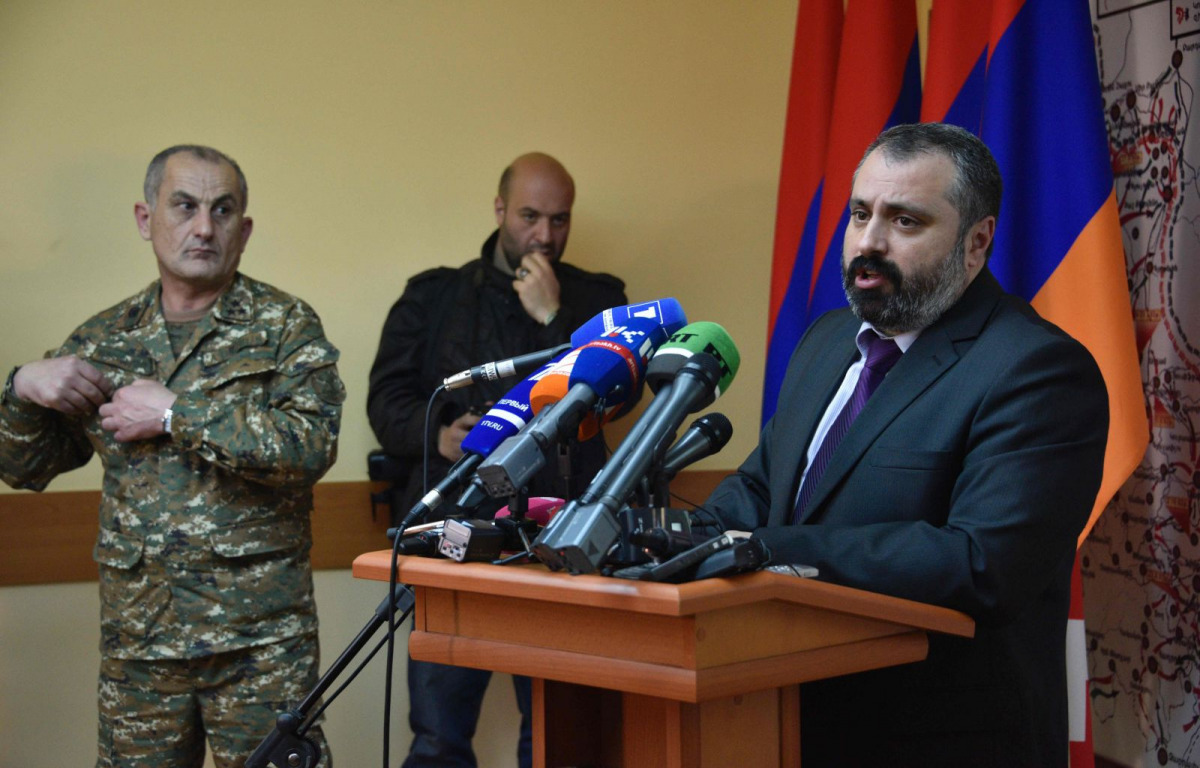
An AFP photographer in Stepanakert said the situation remained calm on Monday in the rebel capital with a population of some 50,000 people.
Hundreds of volunteers were arriving in the city from Armenia to fight alongside separatist forces, while local authorities were busy organising shelters for the refugees from frontline Armenian villages.
- Erdogan backs Baku -
President Vladimir Putin of Russia, which has sold weaponry to both sides but has far closer economic and military ties to Armenia, has called for a ceasefire, a move echoed by Washington.
But Erdogan -- the other major regional power broker who has been at loggerheads with Putin since Ankara's downed a Russian war plane over the Syrian border in November -- fanned the flames.
"We are today standing side-by-side with our brothers in Azerbaijan. But this persecution will not continue forever," Erdogan said in televised comments.
"Karabakh will one day return to its original owner. It will be Azerbaijan's".
Russian Foreign Minister Sergei Lavrov and the US Secretary of State John Kerry discussed Karabakh in a phone conversation on Monday, Russia's Foreign Ministry said in a statement.
In an apparent reference to Erdogan's statement, "Lavrov and Kerry condemned attempts by certain 'external players' to instigate confrontation around Karabakh," the ministry said.
Mediators from Russia, the United States and France -- which have long spearheaded attempts to find a solution to the "frozen" conflict -- are set to meet in Vienna on Tuesday.
- 'Geopolitical implications' -
Ethnic Armenian separatists backed by Yerevan seized control of the mountainous Nagorny Karabakh region in an early 1990s war that claimed some 30,000 lives. The foes have never signed a peace deal despite the 1994 ceasefire.
Energy-rich Azerbaijan, whose military spending exceeds Armenia's entire state budget, has repeatedly threatened to take back the breakaway region by force if negotiations fail to yield results.
Sporadic clashes happen regularly along the front but the latest outbreak represents a serious escalation and analysts warned it risked spiralling even further.
"The Karabakh conflict has serious geopolitical implications," Sergi Kapanadze, a professor of international relations at the Tbilisi State University, told AFP.
The flare-up "threatens the stability of the strategic Caucasus region which is a transit route of Caspian oil and gas to European markets that bypasses Russia, reducing Europe's dependence on Russian energy supplies," he said.
AFP