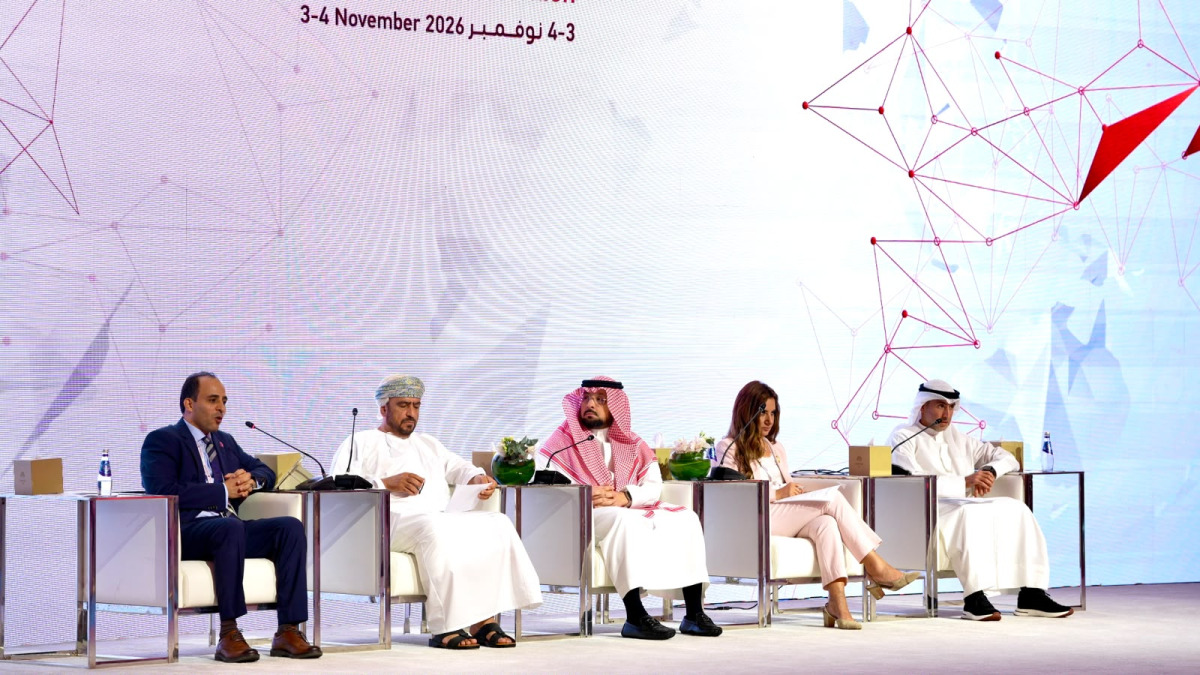
Panellists during a session.
Doha, Qatar: The first day of the Sixth World Conference on International Arbitration featured four specialised sessions addressing key developments in international arbitration, including the relationship between the judiciary and arbitral institutions, innovation in arbitral proceedings, investment protection and the limits of arbitral tribunal discretion.
Speaking at the first session, titled “Integration between the Judiciary and Arbitration: From Judicial Oversight to Supporting the Arbitral Process,” Dr. Sheikh Thani bin Ali Al-Thani, Vice Chairman of Qatar International Centre for Conciliation and Arbitration (QICCA), affirmed that Qatar has become one of the leading destinations in the field of arbitration, supported by the development of its legislation and alternative dispute resolution mechanisms, as well as the availability of highly qualified arbitration expertise.
He noted that Qatar’s accession to major international conventions, including the New York Convention and the Washington Convention establishing the International Centre for Settlement of Investment Disputes (ICSID), has further strengthened investor confidence in the country’s investment environment.
He also highlighted that Qatar’s Arbitration Law No. 2 of 2017 is aligned with the UNCITRAL Model Law, providing a modern legal framework that keeps pace with international developments. He underlined QICCA’s role in promoting the culture of arbitration in Qatar and strengthening cooperation with leading national institutions, particularly Qatar University, in the areas of arbitrator qualification and training.
Dr Sheikh Thani also welcomed the agreement signed between QICCA and Lusail University to establish a specialised master’s programme in arbitration, describing it as an important step towards developing national expertise in this field.
He further referred to a ruling by the Paris Court of Appeal upholding one of QICCA’s decisions concerning a challenge to the composition of an arbitral tribunal, noting that this development reinforces the Centre’s international standing and recognition beyond Qatar.
The first session was chaired by Dr. Mohammed Hassan Al-Kaabi, Dean of the College of Law at Qatar University. The speakers included Dr. Masoud bin Mohammed Al-Amri, former President of the Supreme Judicial Council and former Minister of Justice; Judge Dr. Mubarak bin Nasser Al-Hajri, Vice President of the Court of Cassation in Qatar and QICCA arbitrator; Judge Nabil Omran, Head of the Commissioners’ Office at the Dubai Court of Cassation and Vice President of the Egyptian Court of Cassation.
The second session, titled “The Future of Arbitral Proceedings: The Role of Arbitration Institutions in Innovation and Enhancing Efficiency,” examined how arbitration institutions can improve procedures, promote innovation and enhance the efficiency of dispute resolution. It was chaired by Khaled Elgarhe, QICCA Chief Legal Counsel.
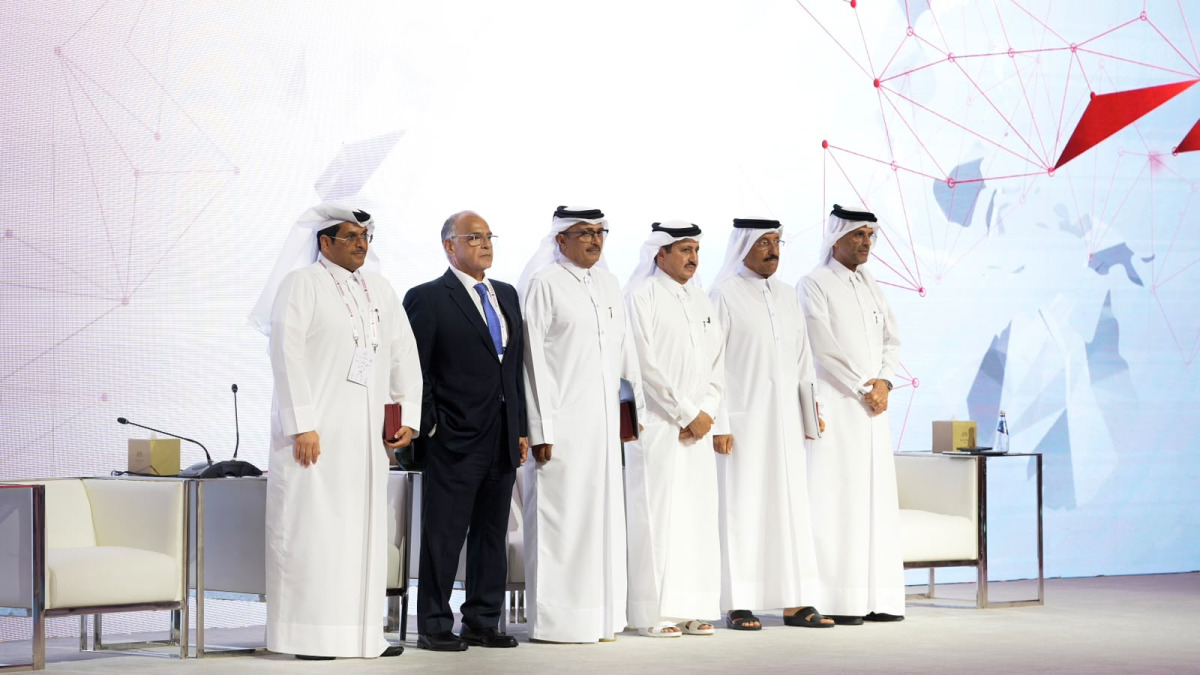 Chairman of QC and Chairman of the Board of Directors of QICCA Sheikh Khalifa bin Jassim bin Mohammed Al Thani along with Vice Chairman of QICCA Dr. Sheikh Thani bin Ali Al-Thani and other officials during the event, yesterday.
The session featured Dr. Hamed Merah, CEO of the Saudi Center for Commercial Arbitration (SCCA); Dr. Khalid Al Saidi, Chairman of the Oman Commercial Arbitration Centre (OCAC); Dr. Marian Kaldas, Executive Director of the Egyptian Center for Arbitration and Settlement of Non-Banking Financial Disputes (ECAS) and Member of the Egyptian Parliament; and Dr. Anas Faisal Altourah, Secretary-General of the Kuwait Commercial Arbitration Centre.
The third session addressed “Investment Protection through International Arbitration: Current Challenges and Emerging Trends.” Chaired by Tarek Labban, Partner at United Counsels and Al Thani bin Ali Al-Thani Law Firm, the session explored the role of international arbitration in safeguarding investments and addressing emerging challenges.
The speakers included Prof. Maria Chiara Malaguti, President of UNIDROIT; Mr. Khawar Qureshi KC, Head of McNair International; Ahmed Durrani, Partner at Sultan Al-Abdulla & Partners and QICCA arbitrator; Ms. Gökçe Uyar, Senior Legal Counsel at the Permanent Court of Arbitration (PCA) in The Hague; and Ricardo Cid, Partner and Head of International Arbitration at Essa Al-Sulaiti Law Firm.
The fourth session examined “The Bounds of the Arbitral Tribunal’s Discretionary Authority: Between Procedural Autonomy and Due Process,” focusing on the limits of arbitral tribunal discretion and the need to balance procedural flexibility with guarantees of fairness. It was chaired by H.E. Dr. Eng. Saad bin Ahmed Al-Muhannadi, President of the Qatar Branch of the Chartered Institute of Arbitrators (CIArb).
The speakers were Dr. Muna Al-Marzouqi, Vice President for Strategy and Institutional Effectiveness at Qatar University, Professor of Law and QICCA arbitrator; Prof. Dr. Mohamed Sameh Amr, Dean of the Faculty of Law at Cairo University, Member of the Board of Governors of CRCICA and QICCA arbitrator; Prof. Nader Ibrahim, Professor of Commercial Law at Qatar University and QICCA arbitrator; and Ms. Zaina Idhali, President of the Souss-Massa Center for Legal and Social Studies and Member of Parliament in Morocco.
The sessions brought together prominent judicial figures, arbitration practitioners and legal experts from several countries to exchange expertise and discuss developments shaping the future of international arbitration.