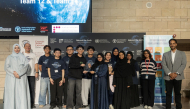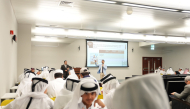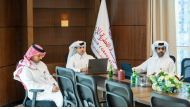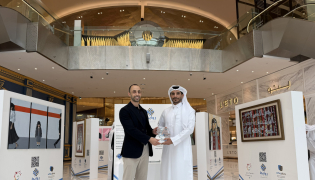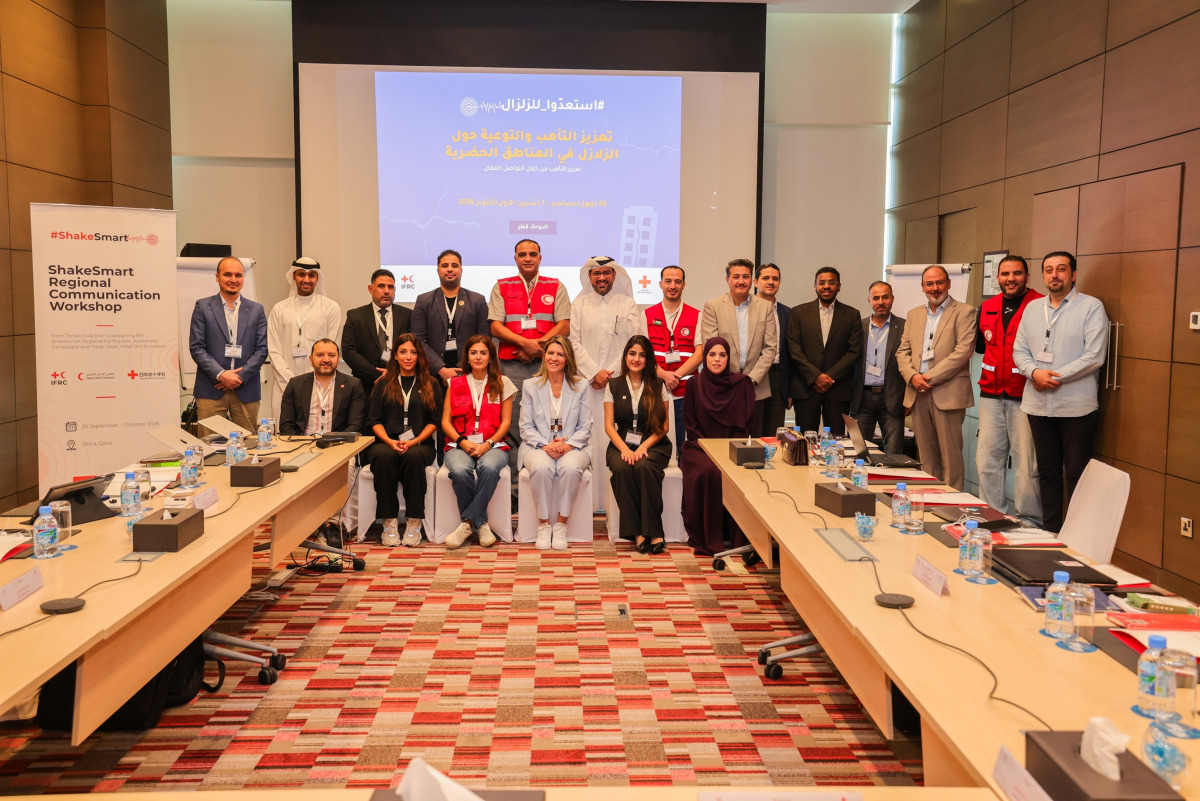
Participants during the workshop.
Doha, Qatar: Qatar Red Crescent Society (QRCS) has hosted the ShakeSmart Regional Communication Workshop, organized by the International Federation of Red Cross and Red Crescent Societies (IFRC), with support from the Japanese Red Cross Society.
Held under the title “From Toolkit to Action”, the two-day event brought together communication focal points from National Societies across the Middle East and North Africa (MENA), to strengthen their leadership in urban earthquake preparedness, with a strong focus on clear risk communication and public awareness.
In his remarks, Assistant Secretary-General for International Relief and Development at QRCS Mohamed Bader Al-Sadah, stated, “In a quiet night of October 1948, almost eight decades ago, an earthquake struck Ashgabat, Turkmenistan, claiming over 100,000 lives. Ten percent of the country’s population perished in just ten seconds.
Inadequate infrastructure was not the sole cause; sometimes, lack of knowledge is the thin line between survival and tragedy. ‘From Toolkit to Action’ is not a mere title, but rather a commitment to transforming communication tools into concrete plans and ready-to-use messages that are culturally specific.
ShakeSmart is at the heart of these efforts. The participants learnt how to use the initiative’s communication toolkit and adapt it to national and local contexts. They also worked on awareness-raising messages and materials tailored to the needs of diverse community groups and outlined a regionally coordinated ‘Drop, Cover, and Hold’ drill. These are three simple words that can save a life. We are not simply drafting plans on paper; we are building communities that know how to protect themselves”.
Cristhian Cortez, IFRC MENA Deputy Regional Director, made a video call to the meeting, “The fact that the region has recently experienced several devastating earthquakes, most notably the Syria-Türkiye and Morocco ones, reminds us that the earthquake risk remains a reality for many communities across a region facing multiple and overlapping challenges, including urbanization, displacement, climate-related hazards, and seismic risks, all of which create compounding vulnerabilities and increase the exposure of communities. While we cannot prevent earthquakes, we can reduce their impact. One of the most effective ways to do this is by ensuring people understand the risks they face and know what actions to take before, during, and after an event.