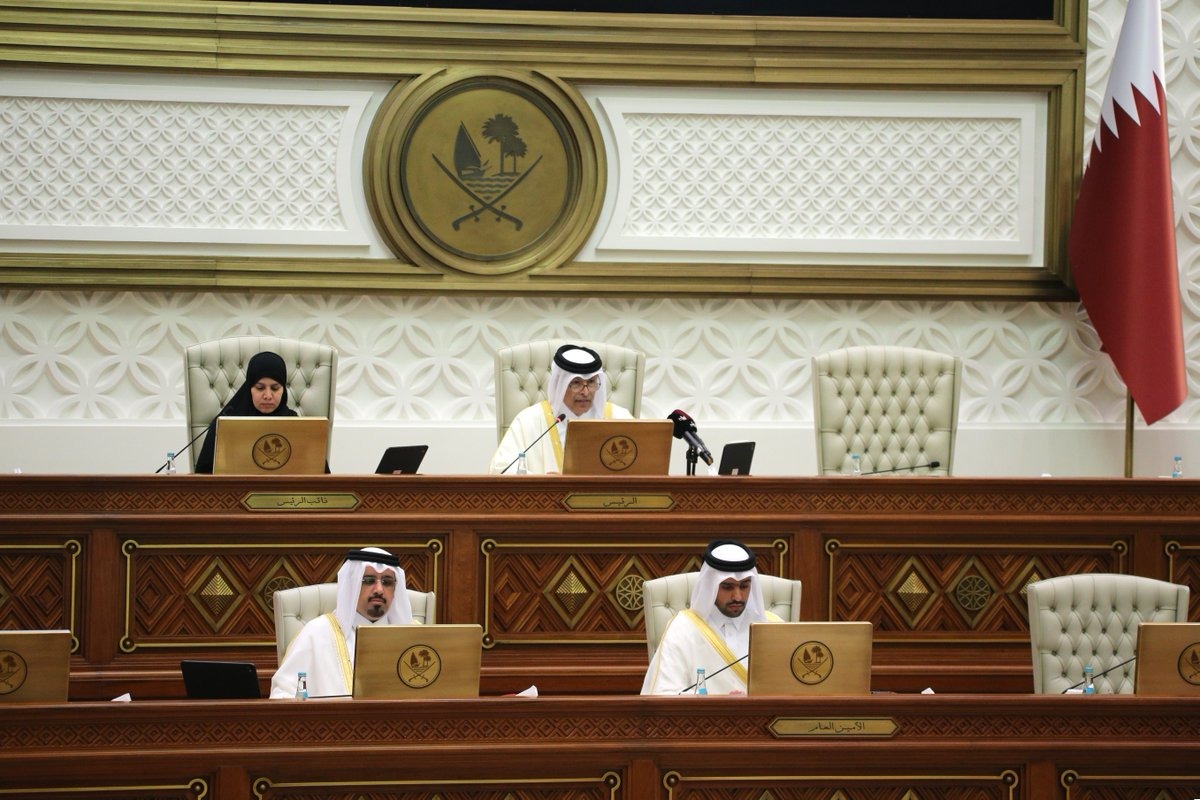
Doha, Qatar: Shura Council convened its regular sitting on Monday, chaired by the Speaker HE Hassan bin Abdullah Al Ghanim, with proceedings focusing on proposals to reinforce parental responsibility and family stability.
At the opening of the sitting, members welcomed the participation of the Amir HH Sheikh Tamim bin Hamad Al-Thani in the recent Gulf consultative summit in Jeddah, the Kingdom of Saudi Arabia, noting its significance in advancing joint Gulf action and coordination on international and regional matters.
The chamber also commended HH the Amir's recent working visit to the Hellenic Republic, where His Highness held talks with HE Prime Minister Kyriakos Mitsotakis aimed at strengthening bilateral relations and reviewing wider geopolitical developments.
The council then proceeded to consider a committee report from the Social Affairs, Labour and Housing Committee on a motion for a general debate concerning parental care and family cohesion, aligned with the objectives of Qatar National Vision 2030.
Opening the debate, Al Ghanim said that accelerating social change had heightened the need for coordinated legislative and policy responses.
He emphasized the role of parents in child-rearing, safeguarding national identity and underpinning social stability.
Presenting the committee's findings, HE Sultan bin Hassan Al Dosari said the committee had held 12 sittings to examine the issue, addressing concerns including reliance on domestic workers, children's use of technology and the need to strengthen parental engagement in education.
Members contributing to the debate stressed that primary responsibility for upbringing rests with the family, while underlining the importance of joined-up action across relevant authorities.
Following deliberations, the council agreed to submit a formal motion to the government setting out a package of recommendations.
These include the establishment of a national body on parental care and family cohesion, the development of regulatory frameworks governing children's use of technology, and expanded public awareness and family support initiatives.
The motion also calls for reforms to employment practices, including more flexible working arrangements, provision for parental leave or care hours, and wider adoption of remote working to support work-life balance.
Further proposals cover revisions to policies on domestic labor, expansion of childcare provision, review of school timetables and curricula, and the introduction of national programs to strengthen cooperation between parents and schools.
Members also highlighted the role of media and religious institutions in promoting values and national identity through targeted awareness campaigns.
Elsewhere on the order paper, the council gave a first reading to a draft law on state property, referring it to the Legal and Legislative Affairs Committee for detailed scrutiny.
It also approved legislation on a unified GCC framework for voluntary work and amendments to the law governing the State Audit Bureau, following committee stage consideration.
In addition, the council agreed to extend committee scrutiny of a draft bill concerning tax exemptions on certain transactions involving foreign companies working with military entities.
Members said the proposals reflect a comprehensive, cross-government approach to addressing challenges facing families and strengthening social cohesion.