Doha, Qatar: A distinguished US higher education leader and scholar described Qatar’s higher education system as “highly innovative and forward-thinking,” noting that it stands out for its diversity, strong international partnerships and progressive initiatives.
“Qatar’s higher education system places a strong emphasis on quality, locally relevant curricula and meaningful outcomes, ensuring that graduates contribute positively to the country’s development,” said Fulbright Specialist Dr. Maureen Snow Andrade in an exclusive interview with The Peninsula.
Dr. Andrade is currently visiting Qatar and working with the National Committee for Qualifications and Academic Accreditation (NCQAA) at the Ministry of Education and Higher Education (MoEHE).
“There is tremendous diversity in institutional types and strong partnerships with reputable, high-ranking universities from the UK, the US, Australia, and other countries. Qatar Foundation’s Education City is particularly impressive and it is an innovative hub with multiple university campuses and exceptional opportunities for students,” said Dr. Andrade.
“Overall, Qatar has developed a visionary and robust higher education system. Even smaller universities actively partner with institutions outside Qatar. Accreditation processes ensure that curricula are adapted to local needs so that learning is relevant to employers and the national context, rather than relying solely on foreign examples,” she added.
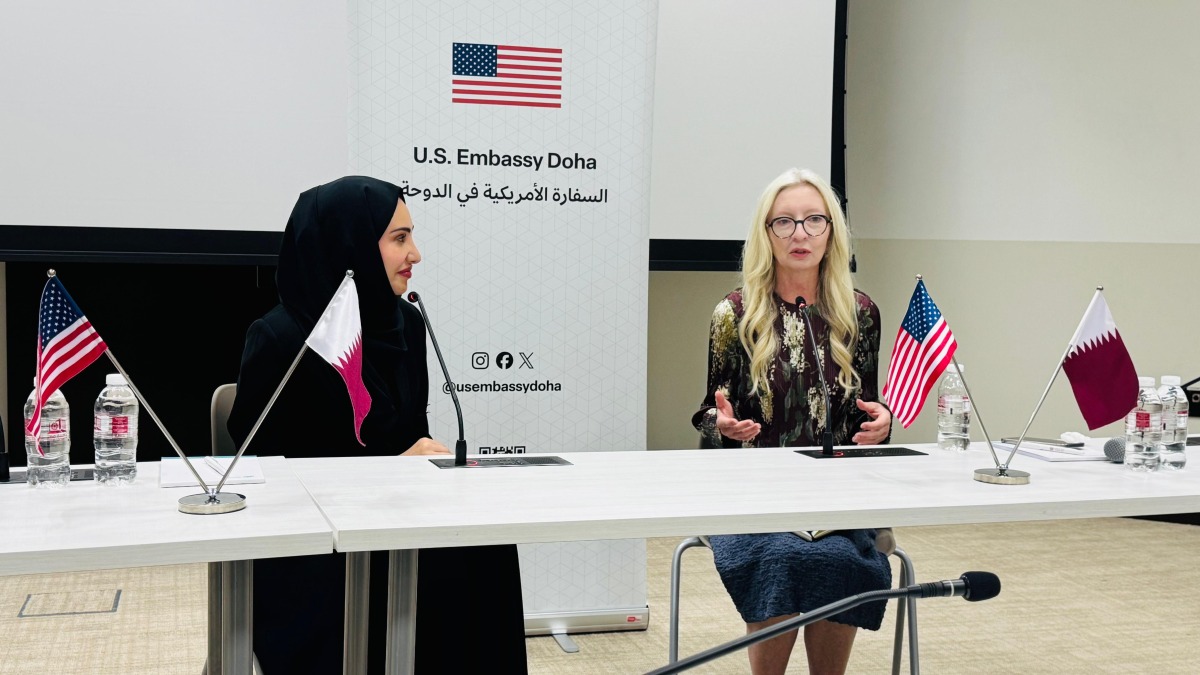
Her six-week visit is facilitated by the US Embassy in Doha and is part of the Fulbright Specialist Programme by the US Department of State.
The programme enables US professionals and academics to share expertise and build international partnerships through short-term, project-based exchanges worldwide. NCQAA was established in 2022 by Qatar Cabinet decision and operates under the MoEHE.
Reflecting on her work in Qatar, Dr. Andrade said her focus has been on strengthening and refining accreditation processes. “They already have accreditation standards in place and are developing policies. I’ve been giving input on the existing standards and helping refine them to make them transparent, easily applicable, and usable by institutions and review teams,” she said.
According to Dr. Andrade, the US accreditation system is guided by four core principles that are highly relevant to Qatar’s higher education system. She explained these include mission-based evaluation, which balances institutional autonomy with public accountability; evidence-based peer review; continuous improvement; and transparency, adding that these principles can be adapted to different national contexts.
She emphasised that adopting international best practices does not mean copying them wholesale. “It’s always necessary to consider how US practices fit the local context and culture, and how they can be adapted rather than adopted entirely,” she said.
As an example, she pointed to NCQAA’s fifth accreditation standard focused on impact. “It measures how institutions affect students, employers, Qatar as a nation, and the global community, while remaining firmly grounded in local priorities,” she said, emphasising that the explicit alignment with Qatar National Vision 2030 demonstrates how global frameworks can be embedded within a national system.
Highlighting the role of accreditation in achieving national goals, Dr. Andrade said strong quality assurance systems support workforce development and the transition to a knowledge-based economy. “That is fundamentally the purpose of higher education and accreditation to measuring impact,” she said. “Review teams assess how institutions engage stakeholders and evaluate their contribution to workforce readiness, priority sectors, research, and innovation, all of which are closely aligned with Qatar National Vision 2030.”
She also stressed the close link between faculty development and accreditation quality. “Faculty members carry out much of the accreditation work. They are responsible for curriculum design, assessing learning outcomes, providing feedback, and ultimately ensuring student success,” she said. “While infrastructure and support systems matter, faculty development is central to achieving high-quality outcomes.”
Drawing on her research in organisational behaviour and leadership, Dr. Andrade noted that effective accreditation depends on strong institutional leadership. “Leaders must focus on structures, people, resources, and recognition,” she said.
“This includes clear roles, accountability mechanisms, data-informed decision-making, and rewarding those who contribute to institutional effectiveness. In accreditation, we often call this building a culture of continuous improvement, and leadership plays a critical role in embedding that culture for long-term success.”