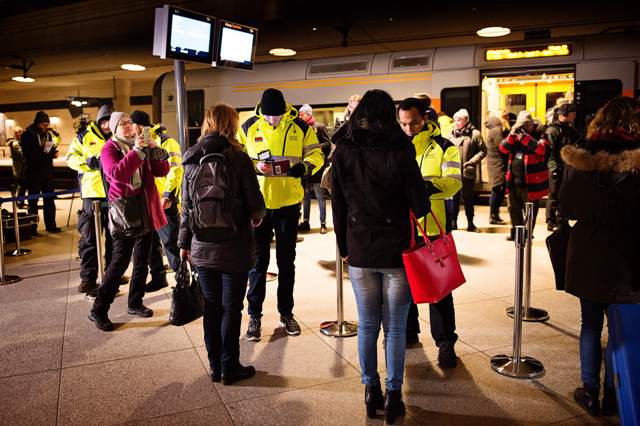

Berlin: Germany on Monday warned the passport-free Schengen zone was "in danger" after Nordic countries announced new controls at their borders to stem a migrant influx.
"Freedom of movement is an important principle -- one of the biggest achievements (in the European Union) in recent years," foreign ministry spokesman Martin Schaefer told reporters.
"Schengen is very important but it is in danger," he added when asked about Denmark's announcement of checks at the German border, on the same day Sweden introduced controls on its frontier with Denmark.
Last week Norway, which is not an EU member but does belong to the Schengen area, said it would start turning back refugees without visas arriving from elsewhere in the Schengen zone, particularly Sweden.
Schaefer said it was "crucial that we in Europe find common solutions" to the worst refugee crisis since World War II, and said the EU must now focus on ensuring the security of its external borders.
Chancellor Angela Merkel's spokesman, Steffen Seibert, said that the Schengen accord, which provides for borderless travel across most of the 28-nation EU, was dependent on better protection of the EU's frontiers.
"We need a common strategy," he said.
Seibert said that Danish Prime Minister Lars Lokke Rasmussen had informed Merkel of his decision before making the announcement.
The migrant crisis, which saw some one million people flooding into Europe in 2015, mostly via Greece and Italy, has sorely tested Europe's commitment to free movement, with several EU members temporarily reimposing border controls as they try to slow the influx.
Seibert noted that Germany, which took in around one million migrants in 2015, had in September also implemented such measures and acknowledged that the Schengen rules allowed such steps in extraordinary circumstances.
Up to 300 asylum seekers leave Germany each day for Denmark, according to Berlin, many of them headed for Sweden, which has received more migrants per capita than any other EU state.
AFP