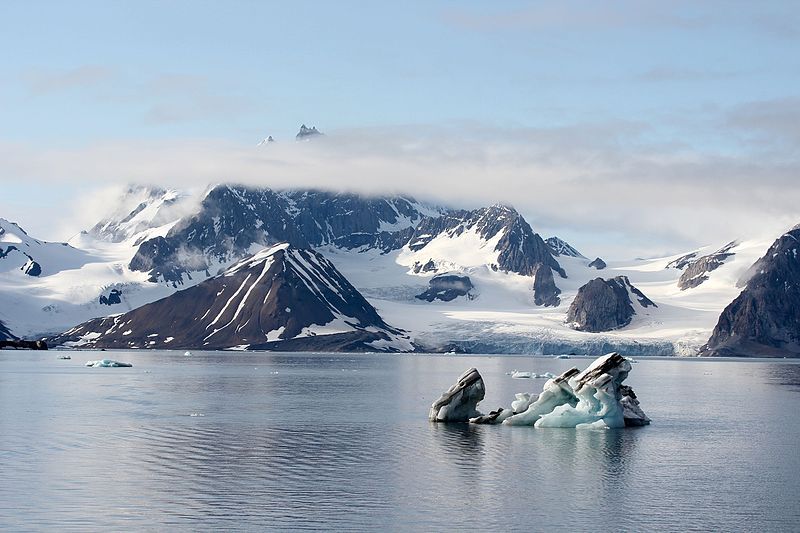
File photo for representational purposes only.
Paris, France: Breaching the 1.5°C global warming will lead to irreversible consequences for Earth's frozen regions and glaciers, according to two UN reports released Monday.
The landmark 2015 Paris Agreement commits the world to limiting warming to well below 2C and pursuing efforts to hold it at 1.5C to try to avoid the worst effects of climate change.
One of the reports said overshooting the 1.5C target "will bring large-scale and in many cases irreversible impacts" for the cryosphere -- Earth's ice in all its forms.
Melting of glaciers and sea ice, the thawing of permafrost and the accelerating rise in sea levels, will have widespread repercussions, from flooding to water shortages.
Some of the effects of the rise in temperature are already visible, such as the 20-percent loss in glacial mass in Switzerland.
But even if the 1.5C target remains relevant, it is already too high for the cryosphere, as current levels of warming were "already unsafe" for the Arctic, Antarctic, mountain glaciers and polar oceans, the UN warned.
"Although returning to 1.5 C will slow ice loss, a truly 'safe' temperature for Earth's ice is now thought to be closer to 1C or even below over the coming centuries," it added.
Global warming has already reached 1.37C above pre-industrial levels and according to the European Copernicus network, the 1.5C threshold could be exceeded around 2030.
"There are no good outcomes in exceeding 1.5C," said glaciologist James Kirkham, lead author of one of the reports, entitled "Overshoot and the Cryosphere", which was written with 80 scientists.
"To contain the global fallout and damage from ice loss in the world's polar and mountain regions, overshoot needs to be kept to the absolute minimum," he said.
"Every extra fraction of a degree and every year spent in overshoot means more devastating impacts."