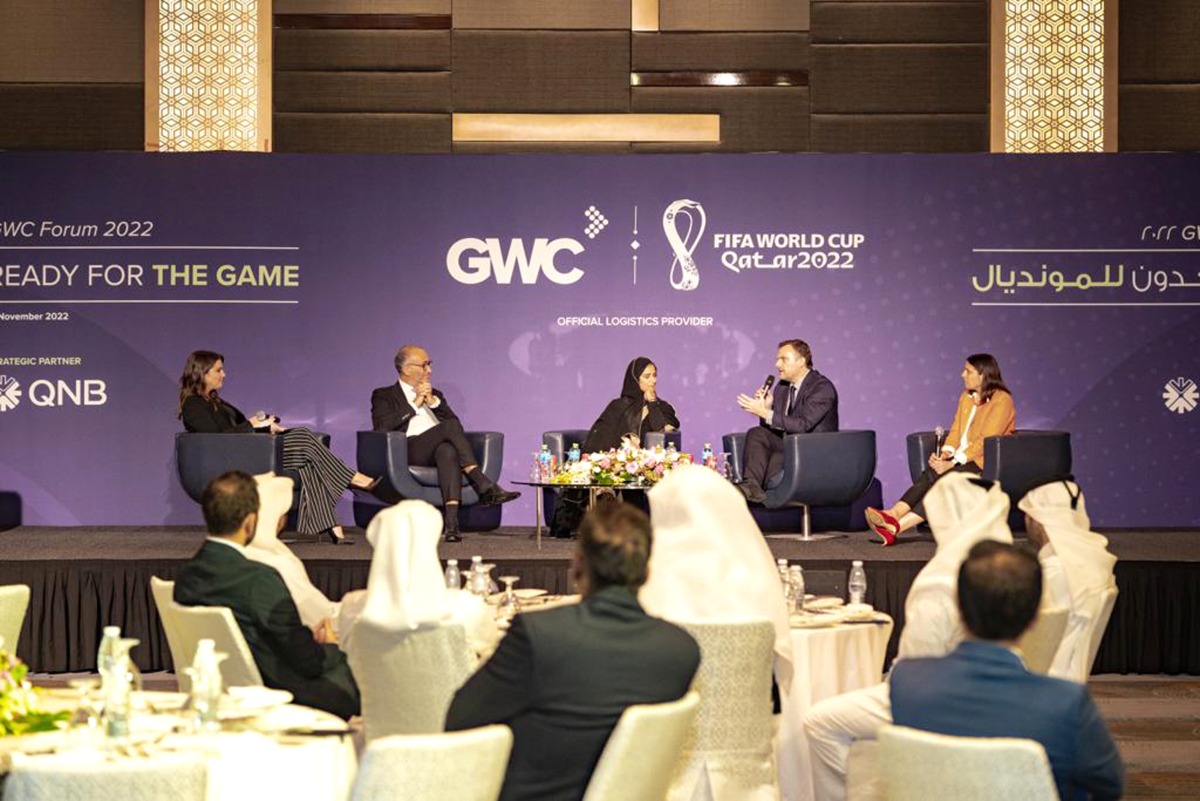
Panellists during a panel discussion at the GWC Forum 2022.
Doha: With just little over a fortnight to go for the greatest show the GWC Forum 2022 set the spirit of the soon-to-be-staged FIFA World Cup Qatar 2022 Games into motion. The second annual forum, titled ‘Ready for the Game’, highlighted how Qatar’s economy will continue to flourish after the World Cup.
The event kicked off with opening remarks from the special guest speaker FIFA Secretary General, Fatma Samoura who addressed the forum with a video message.
During her video address, Samoura said: “MSMEs represent the backbone of a successful and diverse economy. They create jobs and foster innovation. Qatar has been a hive of innovation in recent years – developing cooling technologies for stadiums and state-of-the-art public transport infrastructure, including the Doha Metro and light rail tram systems.”
“GWC, its partners and stakeholders are utilising the assets and experience of hosting the FIFA World Cup to deliver an economic legacy that is aligned with Qatar National Vision 2030. One of Qatar’s great strengths is its determination to leverage the power of hosting the FIFA World Cup like no other country in history. And it is heartening to see that legacy being delivered even before the big kick-off.” She added.
The first panel discussion titled ‘Direct and Indirect Impact of Qatar 2022 on MSMEs’ included contributions from Jose Dhooma, Head of Event Logistics and Transport, FIFA, Fatma Al Nuaimi, Communications and Media Executive Director, Supreme Committee for Delivery & Legacy (SC), Nazli Berberoglu, General Manager, Coca-Cola, and Syed Maaz, Chief Business Development Officer, GWC.
Dhooma said hosting the FIFA World Cup in Qatar had raised the bar for a vast number of businesses. “There is a better understanding of international requirements as a result of the World Cup,” he commented. Al Nuaimi said the SC had worked closely with MSMEs in Qatar and the region on a large number of infrastructure projects, including stadium developments.
Berberoglu commented on Coca-Cola’s commitment to working with MSMEs.
Maaz outlined GWC’s contribution to the MSME sector, including the development of 4 million square meters of logistics infrastructure and an ever-expanding ecosystem for small enterprises. “The MSME sector has grown a lot in the last 10 years and is now a major driver for the economy,” said Maaz. “GWC has created an infrastructure to make it easy for MSMEs to set up in business. We are now managing a huge amount of warehousing in the country, including Al Wukair Logistics Park, which was built specifically to support MSMEs.”
The second panel session, titled ‘The Way Forward’, looked into the trends and challenges faced by MSMEs. Participants included Charles Nahas, Regional General Manager, Microsoft, Dr Manal Al Zaidan, Director of Pharmacy, Primary Health Care Corporation (PHCC), Dr Christos Anagnostopoulos, Assistant Professor, HBKU, and Dr Kamilla Swart, Associate Professor, HBKU. The panellists discussed the impact of the FIFA World Cup on their various sectors and outlined the trends they expected to see after the tournament.
Nahas spoke on three points related to MSME’s namely startups, home grown businesses and commercial / small shop owners.
“We go out of our way to assist all three levels of MSME’s with innovative ideas to equip them for the current and future build of their company,” he emphasized.
Dr. Christos Anagnostopoulos, Assistant Professor, Hamad Bin Khalifa University observed that they have been doing research for the last 10 years and will continue to use this in the development not only for potential World Cup organizers, but also the MSME’s in their quest for market intelligence which will equip them on the global stage. “They will also help MSME’s to leverage their geographical location of Qatar to the region and Middle East,” he noted.
Hamad Al Abdan, Director of Business Development & Investment Promotion, Ministry of Commerce of Industry, gave a presentation about the 1,000 Opportunities scheme, which invites businesses in the private sector to partner with global brands. He also discussed the business ecosystem in Qatar, describing the FIFA World Cup as a golden opportunity for the country’s economy to prosper in future.
Aysha Khalifa Al Romaihi, Manager of Special Programmes – Incubation, Qatar Development Bank (QDB), gave a presentation about Scale7 – the country’s first fashion and design incubator, set up to support creative entrepreneurs.
The final workshop was led by Dr Adel Elomri Assistant Professor, HBKU, and Dr Laoucine Kerbache, Professor, HBKU, and focused on the research undertaken to track the impact of Qatar’s FIFA World Cup and how the education sector can work with industry to support students and alumni.
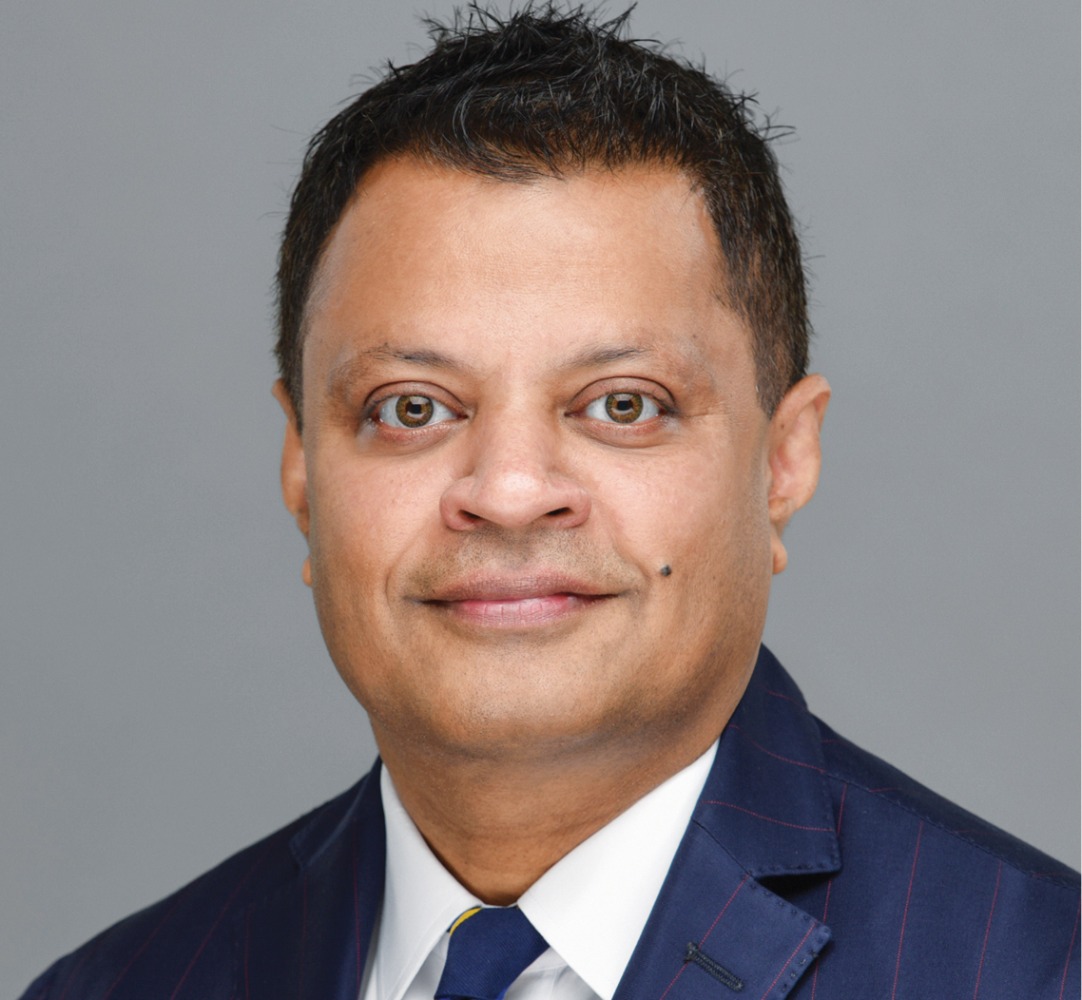
Ranjeev Menon, Group CEO, GWC
Following the event, Ranjeev Menon, Group CEO, GWC, said: “GWC is proud to be at the forefront of MSME development – helping the current and next generation of businesses in Qatar as the country aims to deliver the goals of Qatar National Vision 2030.” “This year’s forum has illustrated the impact of hosting the FIFA World Cup and how Qatar is leveraging the numerous opportunities that hosting a sporting mega-event offers. We look forward to continuing our work with partners across various industries as we strive to power Qatar’s economy long into the future.”
Menon continued: “I would like to thank all our valuable partners and stakeholders for taking part in another successful edition of the GWC Forum. We look forward to continuing the conversation as Qatar reaps the benefits of hosting the FIFA World Cup in legacy mode.”