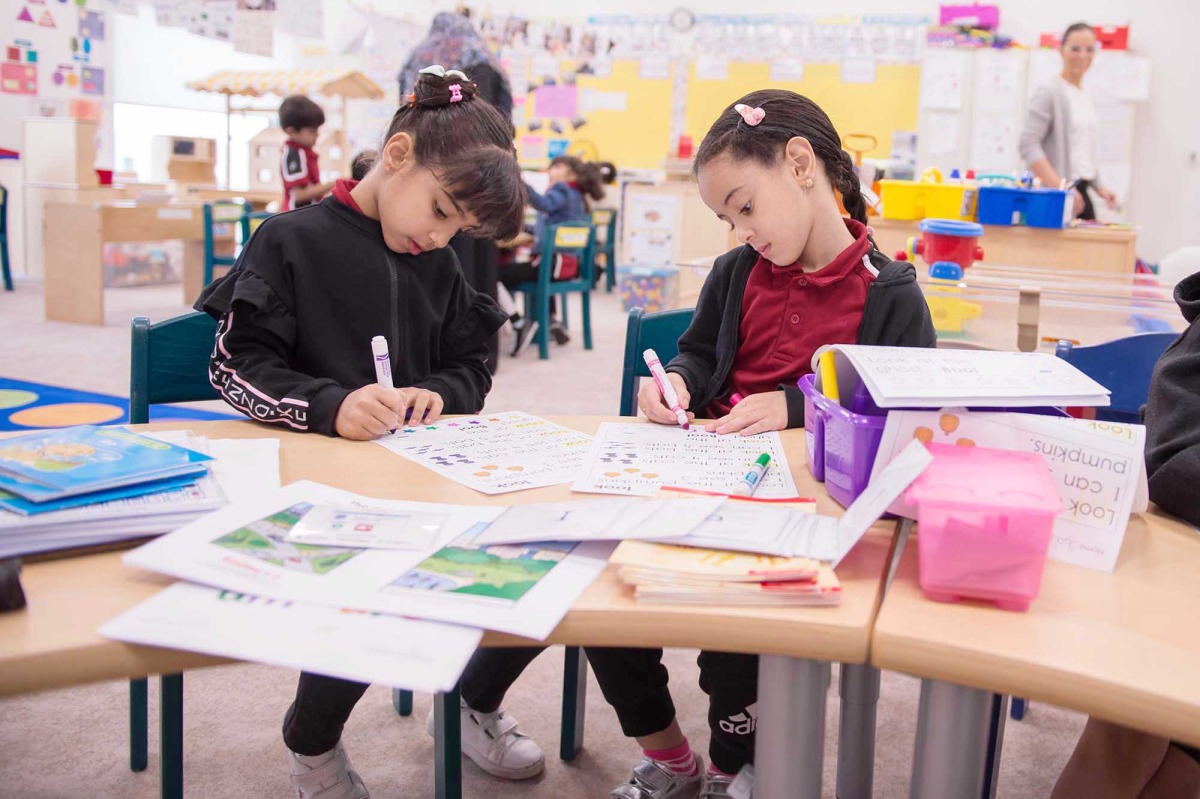
Doha, Qatar: Qatar Foundation (QF) schools are placing “Authentic Learning” at the centre of the new academic year, with a stronger focus on real-world experiences, student excellence, AI literacy and meaningful engagement beyond the classroom as 9,379 students return to school.
The approach is built around a simple objective, ensuring that the time students spend at school is “time well spent”, according to Vice President of QF Schools at QF’s Pre-University Education, Mehdi Benchaabane.
“We want the time students spend on campus to be time well spent, and that ambition shapes each of our new initiatives,” Benchaabane told The Peninsula.
Among the key initiatives being introduced this year is Ruwwad, a student excellence framework that provides students with structured pathways to develop their abilities in sport, STEM and computational thinking, arts and languages, and service and leadership.
The framework aims to recognise achievement and growth both inside and outside the classroom.
QF schools are also implementing an Islamic Civilisation curriculum, giving students a deeper understanding of the intellectual and cultural heritage of the region.
At the same time, students will receive AI literacy education as QF schools adopt a more deliberate approach to technology use. This includes a no-phone-on-campus policy.
“We want students using technology to deepen and personalise their learning, not to offload the thinking that learning actually requires,” he said.
The new academic year also brings expansion across QF’s education network.
Qatar Academy Sidra has opened its new campus, while Qatar Leadership Academy begins the year under a new identity as a collaboration with the Ministry of Defense, offering a distinctive pathway for students interested in leadership and service.
QF is also developing an Academy for Continuing Education, formerly known as the PRIME programme, extending its educational offering into adult and continuing education.
Meanwhile, Tariq bin Ziad School is opening Grade 8 this year, while efforts are under way to expand access to the Juthoor early years programme through new sites.
Benchaabane said the expansion is being driven by demand from families seeking quality education at different stages.
“Families in Qatar want high-quality, values-anchored education, and they want it available at every stage,” he said. “Our aim is a coherent pathway that begins in the early years and continues into adulthood.”
Benchaabane described the growth in number of students as steady and deliberate, stressing that expansion would not come at the expense of quality.
“Every additional place has to come with the staffing, the facilities, and the quality of provision to match it. Growing well matters more to us than growing fast,” he said.
Beyond academics, QF is also seeking to increase student participation in after-school activities, with a focus on ensuring that students find opportunities that genuinely match their interests.
Students will have opportunities to take part in competitions, community service, Model United Nations, sports fixtures, performances and student leadership, including initiatives designed and led by students themselves.
Being part of the wider QF ecosystem also gives students access to opportunities extending well beyond the school campus.
QF schools are located alongside universities, research institutes, cultural organisations and sporting facilities, creating opportunities for students to engage with academics, researchers and professionals.
“This is our single greatest advantage, and this year we are intensifying our collaboration with QF entities to make more of it,” Benchaabane said.
The priority, Benchaabane added, is to make these opportunities more systematic and accessible to all students rather than limiting them to those who are already confident about seeking them out. For Benchaabane, real-world exposure is essential to helping students discover their interests.
“Students discover what they love by doing things, not by being told about them,” he said.
He added that a student who may show little interest during a classroom chemistry lesson could discover a passion for science after spending time in a research laboratory. Such experiences also expose students to real standards and challenges.
The philosophy is also reflected in QF’s approach to assessment, with efforts to measure what students can actually do in situations that more closely resemble the real world.Technology, Benchaabane said, should support that process, but never replace critical thinking.
As students begin the new academic year, Benchaabane urged them to make the most of the opportunities available to them. His message to students is ultimately about participation, curiosity and engagement.
“Students should use technology to go further and deepen their understanding while resisting the temptation to let it do the thinking for them. The thinking is the point,” he said.