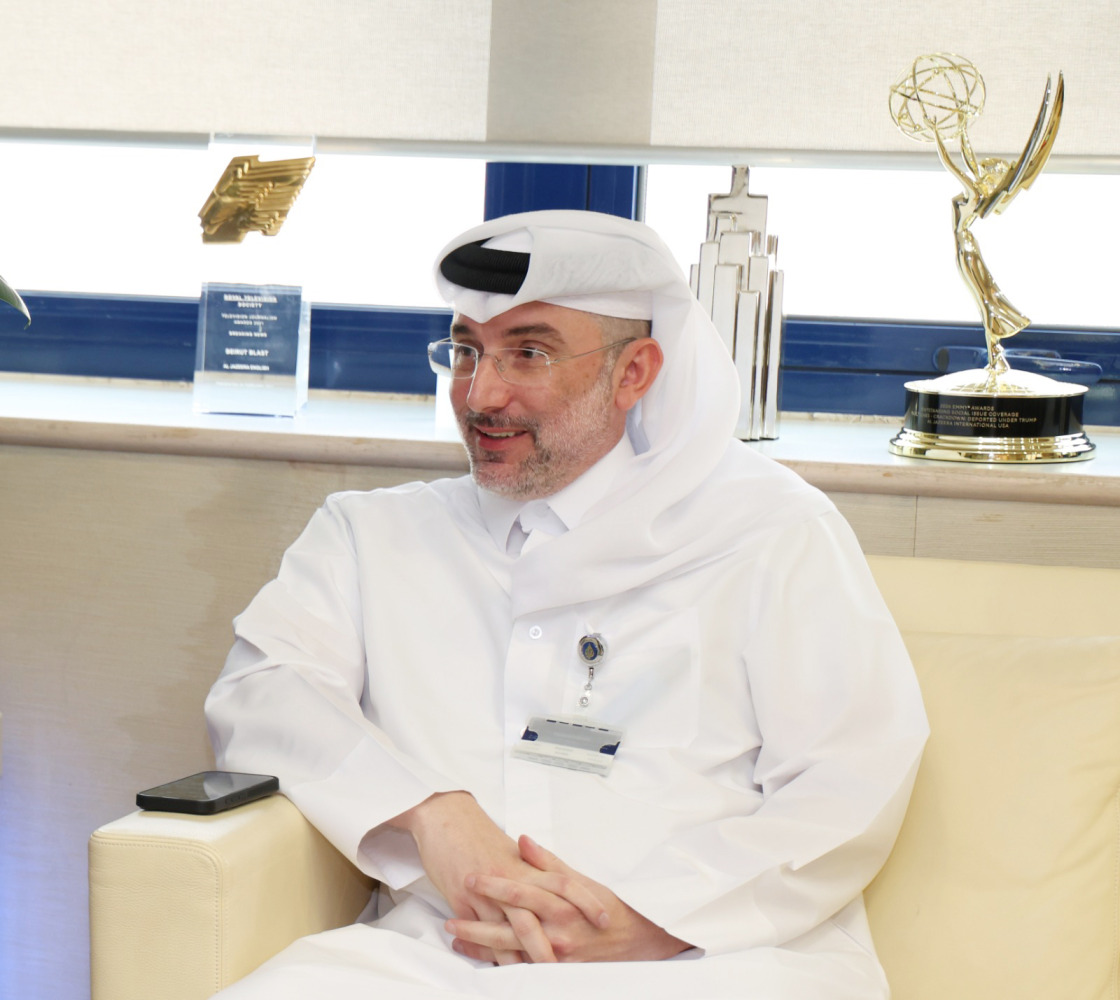
Managing Director of Al Jazeera English, Issa Ali
Doha, Qatar: Al Jazeera English is developing an ambitious five-year strategy to expand its international reach, strengthen its presence in Africa, Asia and the United States, and invest in digital innovation while maintaining its commitment to independent journalism, according to the channel’s Managing Director, Issa Ali.
Speaking in an exclusive interview with The Peninsula as Al Jazeera marks three decades of journalism, Ali said the Doha-based network is exploring new regional programming, expanding its digital platforms and reviewing its global bureau operations to reach wider audiences.
“For Al Jazeera English, we are working on a strategy for the next five years. There are different elements about that strategy,” he said.
“The US market is obviously one of our top priorities,” Ali explained, highlighting plans to build on the network’s existing broadcasting operations in Washington, D.C. He added that Africa and Asia are also central to the expansion strategy, with discussions underway about developing dedicated programmes addressing issues affecting audiences across both regions.
“We’ve had various discussions about Africa and what we can do more in Africa. We’re already very popular in Africa, Al Jazeera English,” he said. Ali revealed that proposed Africa-focused programming could include documentaries and discussion shows examining continental developments rather than individual countries’ domestic affairs. “There are discussions of, from a program’s perspective, where we do specific Africa programs for the African audience,” he said. He noted that similar initiatives are being considered for Asia, building on existing regional news segments focusing on the United States and Latin America. According to him, the network, which maintains a presence in almost 60 locations worldwide, is also reviewing its international bureaus to determine where permanent operations or contributor-based coverage would be most effective. Reflecting on Al Jazeera’s transformation from a regional Arabic-language broadcaster into an internationally recognised media organisation, Ali credited its success to distinctive journalism and its commitment to reporting underrepresented perspectives.
“We give people the voice of the voiceless,” he said, stressing that the network’s influence stems from its willingness to pursue challenging stories. He maintained that Al Jazeera operates editorially independently despite receiving funding from Qatar, adding that its journalists apply the same professional scrutiny when interviewing Qatari officials as they do with international figures. Addressing the growing influence of artificial intelligence, Ali said Al Jazeera English is examining technological solutions to improve operational efficiency without compromising editorial judgement. “Our aim in Al Jazeera in terms of AI is how can AI assist us in doing what we do in a more efficient manner?” he said.
He explained that potential applications include administrative processes, scheduling and translation, while human oversight remains essential for editorial decisions. “I’m a big believer in AI tools, but I’m also a big believer that journalism will still require a human element, a human touch,” Ali emphasised. Discussing investigative journalism, he said the network remains committed to producing in-depth documentaries, even when investigations require years of research, interviews and verification. He cited a recent investigation that took three years to complete, underscoring the importance of accuracy over speed. “I always tell the team, I don’t want to be first. I want to be right,” he said. “Being first doesn’t serve anyone. Being right serves everybody.” Looking ahead, Ali identified editorial credibility, technological adaptation and the continued coverage of human-interest stories as essential to Al Jazeera English’s future.
He also emphasised the importance of supporting journalists operating in challenging environments, acknowledging the dangers faced by correspondents covering conflicts. Asked about the legacy he hopes to establish as Managing Director, Ali identified three fundamental principles. “Accuracy, fairness, empowerment,” he said. “You need to be accurate to do what we do. You need to be fair to do what you do. You need to empower people to do what they do, from a journalistic standpoint.” Ali concluded that the network’s greatest achievement remains its journalistic impact, with its future success dependent on maintaining public trust while adapting to a rapidly changing global media landscape.