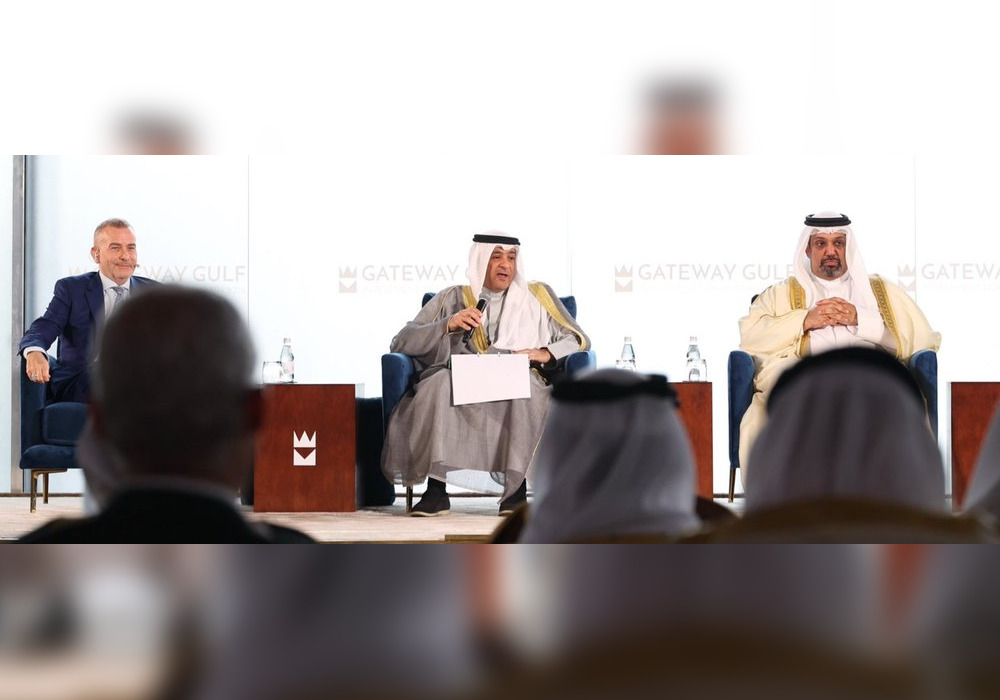
Manama: Secretary-General of the Gulf Cooperation Council (GCC), Jasem Mohamed Albudaiwi, underscored that member states have invariably demonstrated their ability to manage crises efficiently and effectively, sustain economic resilience, and maintain development momentum amid the region's extraordinary developments and mounting security and economic challenges.
Albudaiwi made the remarks during a session on the sidelines of the fourth Gulf Gateway Forum, held in Bahrain on Sunday. He explained that the Iranian attacks on the GCC states imposed unprecedented challenges, with spillover effects across the energy, transport, logistics, and supply chain sectors.
Nevertheless, the GCC states demonstrated exceptional cohesion and considerable capacity to contain the fallout from these attacks through close coordination, bolstering institutional readiness, and sustaining economic activity and critical services, Albudaiwi underlined.
He stressed that this experience had made it abundantly clear that Gulf integration was no longer merely a development option but had become a strategic necessity to safeguard national gains and bolster collective crisis-response capabilities.
He added that Their Majesties and Highnesses the Leaders of the GCC states had charted a clear course for strengthening joint Gulf action during their 19th Consultative Meeting, held in Jeddah last April.
Their directives, Albudaiwi noted, called for pressing ahead with strategic and integration projects, developing interconnection, transport, and logistics systems, and strengthening connectivity across the energy and water sectors, alongside cementing defense and security cooperation and integration.
These measures are instrumental in bolstering Gulf readiness, enhancing the GCC states' capacity to confront future challenges, and safeguarding their strategic interests, Albudaiwi pointed out.
Albudaiwi reemphasized that the Strait of Hormuz represents a vital artery of the global economy and that ensuring its security and the safety of navigation through it is not solely the responsibility of the GCC states but a shared international responsibility, given its paramount importance to energy flows, international trade, and global market stability.
He further stressed that any threat to freedom of navigation through this international waterway has repercussions extending well beyond the region, affecting the global economy as a whole.
Albudaiwi underscored the importance of the international community compelling Iran to implement United Nations Security Council Resolution 2817 of 2026, which affirmed the importance of guaranteeing freedom of maritime navigation, safeguarding the security of international waterways, and preventing the weaponization of these waterways as instruments of pressure or threats or as a means of undermining global economic stability.
Albudaiwi emphasized that, despite the tremendous challenges they have faced, the GCC states remain steadfastly committed to advancing their development visions and deepening their international partnerships, driven by the enduring conviction that security, stability, and economic growth are indivisible pillars.