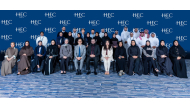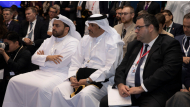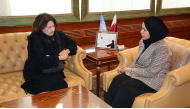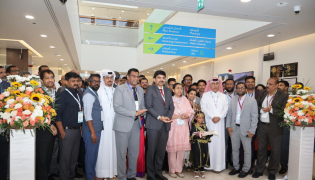
Doha, Qatar: Doha will host the Fifth UNESCO Conference on Higher Education in the Arab States on Monday, bringing together academics, experts, decision-makers and representatives of universities and regional and international organizations to examine the transformations reshaping higher education and chart its future beyond 2030.
Convened under the theme "The New Learning Landscape in Higher Education in the Arab Region", the two-day event is organized by the Ministry of Education and Higher Education (MOEHE) in collaboration with the United Nations Educational, Scientific and Cultural Organization (UNESCO) and the Qatar National Commission for Education, Culture and Science.
The conference is held under the patronage of Minister of Education and Higher Education HE Lolwah bint Rashid Al Khater. Its central thrust is to examine key transformations and formidable challenges facing the higher education sector and consider how institutions can navigate them in the post-2030 era, helping improve the quality of education and scientific research and foster innovation.
The conference sessions will address major themes, including the recognition of academic qualifications across Arab states, digital transformation in higher education, the responsible and ethical use of AI, and strengthening academic competencies and supportive working environments for faculty members, in accord with international trends and the ongoing review of UNESCO's 1997 Recommendation concerning the Status of Higher-Education Teaching Personnel.
Discussions will also look ahead to the future of higher education and the post-2030 development agenda.
Secretary-General of the Qatar National Commission for Education, Culture and Science, Nouf Khalid Al Suwaidi, said the State of Qatar's hosting of the conference underscores its standing as a regional and international hub for education, scientific research and innovation, while highlighting its instrumental role in advancing academic cooperation and charting the future of higher education across the Arab region.
The conference provides a strategic platform for decision-makers, experts and academics to chart the future of higher education in the AI era, hash out innovative policies to strengthen educational quality and governance, and align academic outcomes with development priorities and labor-market needs, Al Suwaidi highlighted.
She hoped that its deliberations would yield substantive recommendations and partnerships to advance the Arab higher education system, bolster its competitiveness and sustainability, and translate dialogue and the interchange of knowledge into concrete initiatives that propel innovation and keep pace with global transformations.
Alongside the conference, a university exhibition will enable participating institutions to showcase their academic programs and research and innovation initiatives. The agenda also features field visits to Qatar University (QU), the University of Doha for Science and Technology, and Qatar Science and Technology Park, offering an opportunity to examine these institutions' experiences in education, research and innovation.
The State of Qatar's hosting of the conference is part of its broader pursuit of strengthening its standing as a regional and international hub for academic dialogue, the interchange of knowledge and stronger international partnerships in higher education, scientific research and innovation, in accord with its national drive to build a knowledge-based economy.
The nation's higher education sector is marked by sustained growth, with almost 27 local and international higher education institutions currently offering more than 500 academic programs across science and humanities disciplines, substantially augmenting human capital, advancing national development goals and entrenching a knowledge-based economy driven by innovation.