Representing Qatar at the AFS Youth Assembly in Geneva, four Carnegie Mellon University in Qatar students deepened their understanding of how technology, human context, and civic responsibility intersect to build a resilient future.
When people hear the term "sustainability," the immediate association is often environmental conservation. But for four Carnegie Mellon University in Qatar (CMU-Q) students, an international summer learning experience led to a far broader, human-centered definition. CMU-Q is a Qatar Foundation partner university.
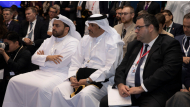
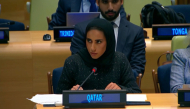
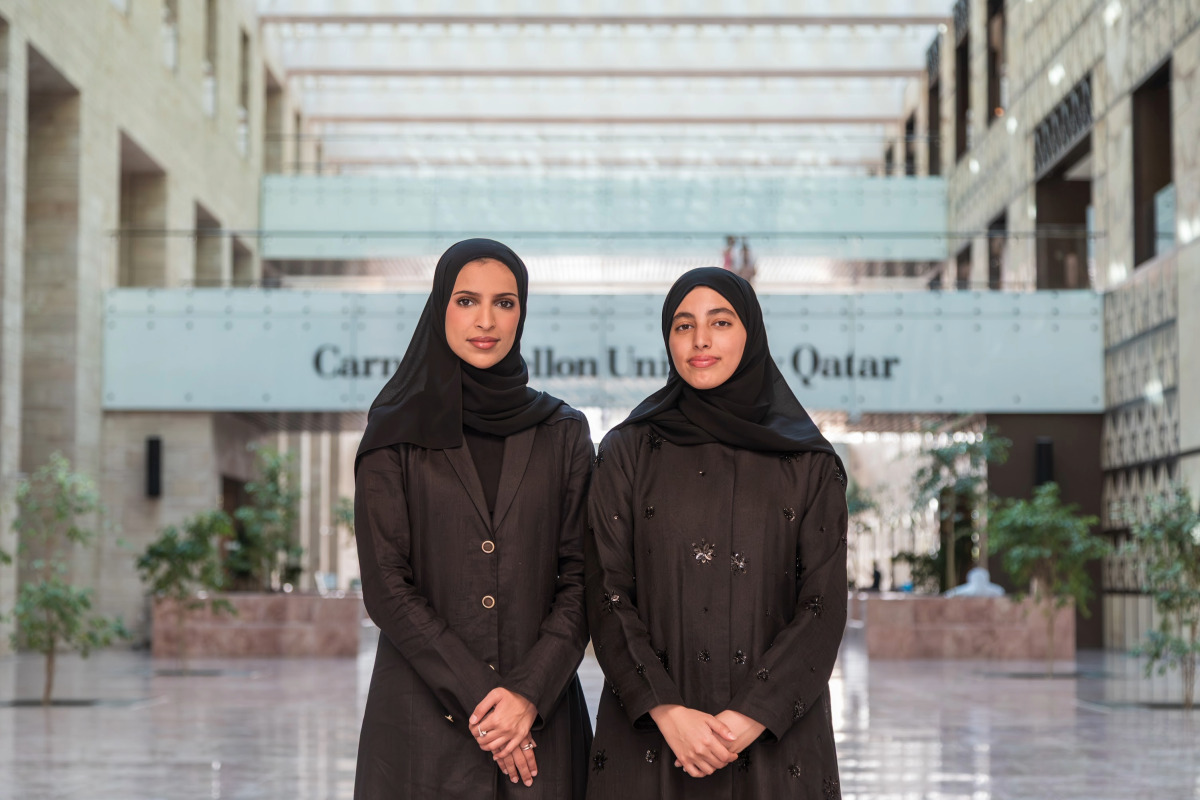
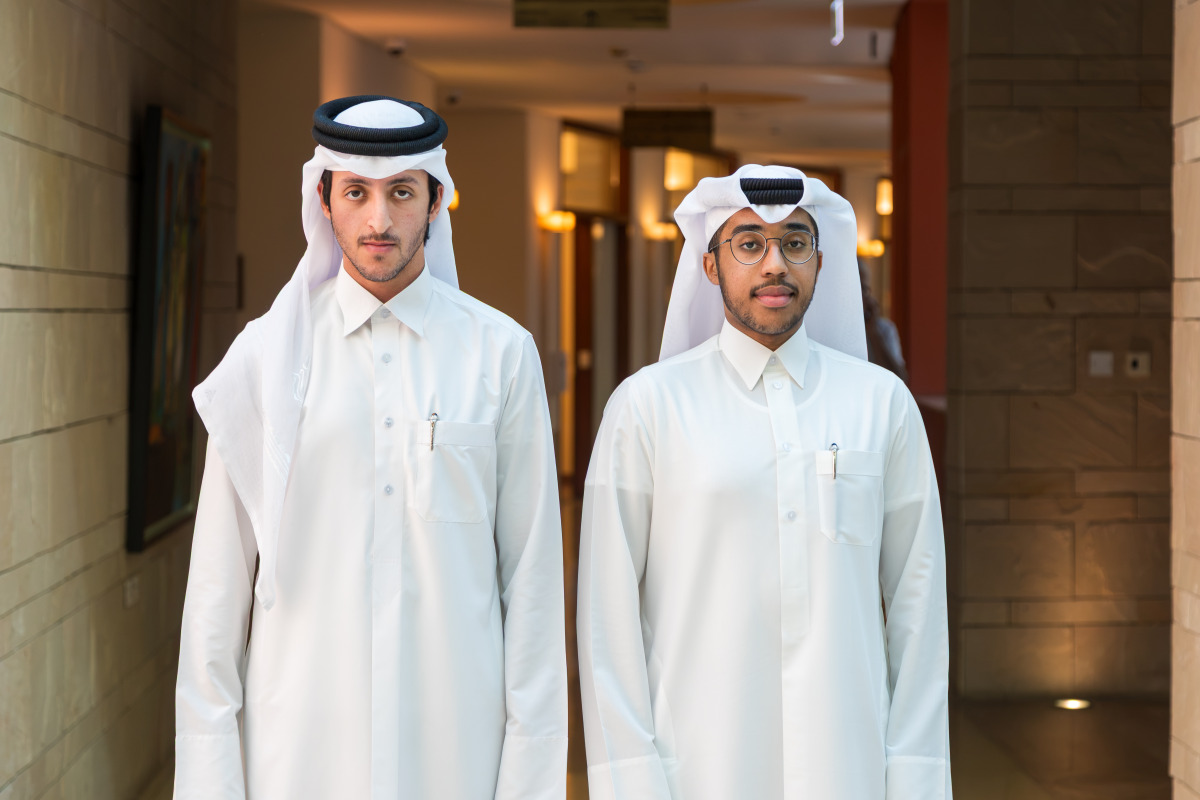
This past summer, CMU-Q students Mohammed Al-Ali, Rashid Al-Kubaisi, Salwa Al-Kuwari and Al Reem Al Thani joined the Qatar delegation for the AFS Youth Assembly in Geneva, Switzerland. The event drew hundreds of young people from more than 80 countries to explore the theme “Rise, reimagine, rebuild: A world for all” and to take action towards the UN Sustainable Development Goals.
“The sessions were all based on sustainability, but that included environmental, economic, and social sustainability,” Al-Kubaisi noted. "It all ties back to what we learn at CMU-Q. We emphasize governance, ethics, sustainability, and the human aspect.”
During the sessions, the recent boom in generative AI was a central topic. Delegates tackled complex questions about how AI can be deployed ethically to establish or improve sustainability standards globally.
"Technology changes lives, and lives change technology—it's two sides of a coin," Al-Kubaisi said.
Grounding technology in the human context
The students found that their education at CMU-Q uniquely prepared them for these discussions by teaching them to look beyond code and disciplinary knowledge to see the broader, human context.
Michael Trick, dean of CMU-Q, noted that this balance is central to the university's mission: “The degree programs that we offer at CMU-Q are rooted in science, technology and mathematics, but our curricula include significant coursework in the humanities and social sciences. We want our students to develop deep technical knowledge, and to also understand the human context so they can apply this knowledge to better society.”
Al-Thani stressed that it is essential for students to step out of disciplinary silos: “A lot of times people get so deep into their understanding of the technology itself that they lack the bigger picture,” she noted. “It’s about having a broad understanding and connecting ideas to a larger meaning, to the greater community.”
A broader definition of sustainability
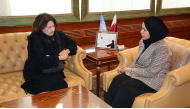
The delegation also visited Her Excellency Maryam Al-Misnad, Minister of State for International Cooperation, Her Excellency Dr. Hend Al-Muftah, Permanent Representative to the UN in Geneva, and Barham Salih, the United Nations High Commissioner for Refugees. These discussions made clear that true sustainability cannot be separated from international development, equitable education, food security, and freedom from conflict.
“Sustainability is about more than reducing our carbon emissions,” said Al-Ali. “Lasting sustainability depends on social responsibility, universal accessibility, and humanitarian resilience.”
Al-Kuwari emphasized that sustainable human development begins with education.
“Investing in people to solve their own issues will always be the best choice,” she explained. “Everyone has skills to solve problems, but the question is access to quality education. If communities have access to knowledge, they can build their own solutions.”
A responsibility to serve and give back
The students agree that their education and opportunities carry a civic responsibility to contribute at home. They are all dedicated to reinvesting their knowledge into Qatar. “It’s about creating an ecosystem where people go in, learn, and come out to give back to the country,” Al-Ali said.
Al-Thani framed this mindset as a natural human duty. “It’s reciprocity,” she said. “When you are supported and given opportunities, you genuinely want to give back. Qatar has invested so much in our education; we have a responsibility to work hard to contribute so we sustain our society.”
For Al-Kuwari, this commitment reflects a guiding national principle: “Something that stays with me is when His Highness the Amir said, ‘Qatar deserves the best from its children’,” she said. “We are receiving a world-class education right here at home. We are getting the best, so our responsibility is to give our best back to Qatar.”