Doha, Qatar: To close Childhood Cancer Awareness Month this September, Sidra Medicine has marked two significant milestones in paediatric cancer care, following the introduction of two specialized therapies for children with high-risk neuroblastoma.
Sidra Medicine’s Paediatric Haematology and Oncology and Haematopoietic Stem Cell Transplant ( HSCT) teams have successfully administered naxitamab (Danyelza) for the first time in the GCC, followed by dinutuximab beta (Qarziba) for the first time in Qatar. Both are anti-GD2 monoclonal antibody therapies and are used in the treatment of high-risk neuroblastoma.
Neuroblastoma is a type of cancer that develops in a child’s nerve tissue – the sympathetic nervous system. The cancer affects babies and young children and almost always develops before the age of 5.
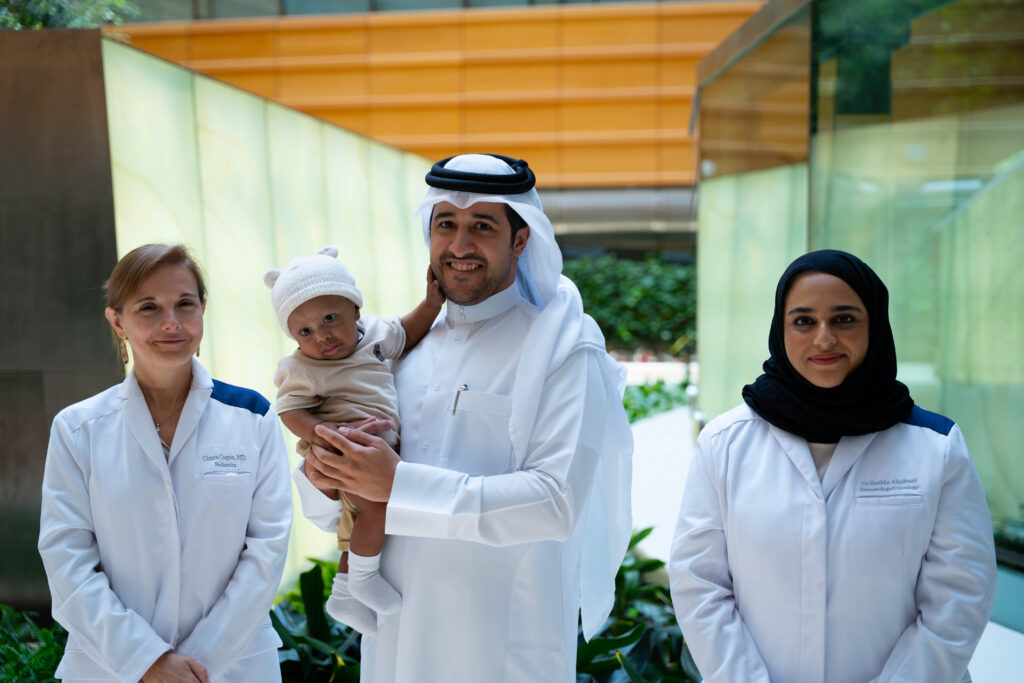
Acting Division Chief of Paediatric Haematology and Oncology at Sidra Medicine, Dr. Chiara Cugno said, “The introduction of these complex therapies involved extensive preparation and collaboration across Sidra Medicine’s medical, surgical, nursing, pharmacy, education and wider multidisciplinary teams.
This is also a testament to our commitment to continually advance paediatric cancer treatment and care as well as expanding access to specialised therapies for children and families in Qatar.”
The therapies were administered to two patients following stem cell transplantation, marking an important advancement in the specialized treatment options available to children with cancer at Sidra Medicine.
Issa who was diagnosed with neuroblastoma at birth, was our first patient in Qatar and the first patient in the GCC, to receive naxitamab (Danyelza). The new specialised therapy was part of his treatment regimen at Sidra Medine, which included a combination of chemotherapy and autologous transplantation.
Issa’s father said, “We couldn’t have asked for a better team to care for Issa, at a hospital that delivers care of the highest international standards. Thanks to the support we received, we were in turn able to support and celebrate every step and milestone of Issa’s journey as a family.”