Meera Al-Kaabi, winner of the Akhlaquna Youth Award, cites her love for her grandparents as the main drive for her project
Published: 01 Jul 2026 - 07:46 pm | Last Updated: 01 Jul 2026 - 08:07 pm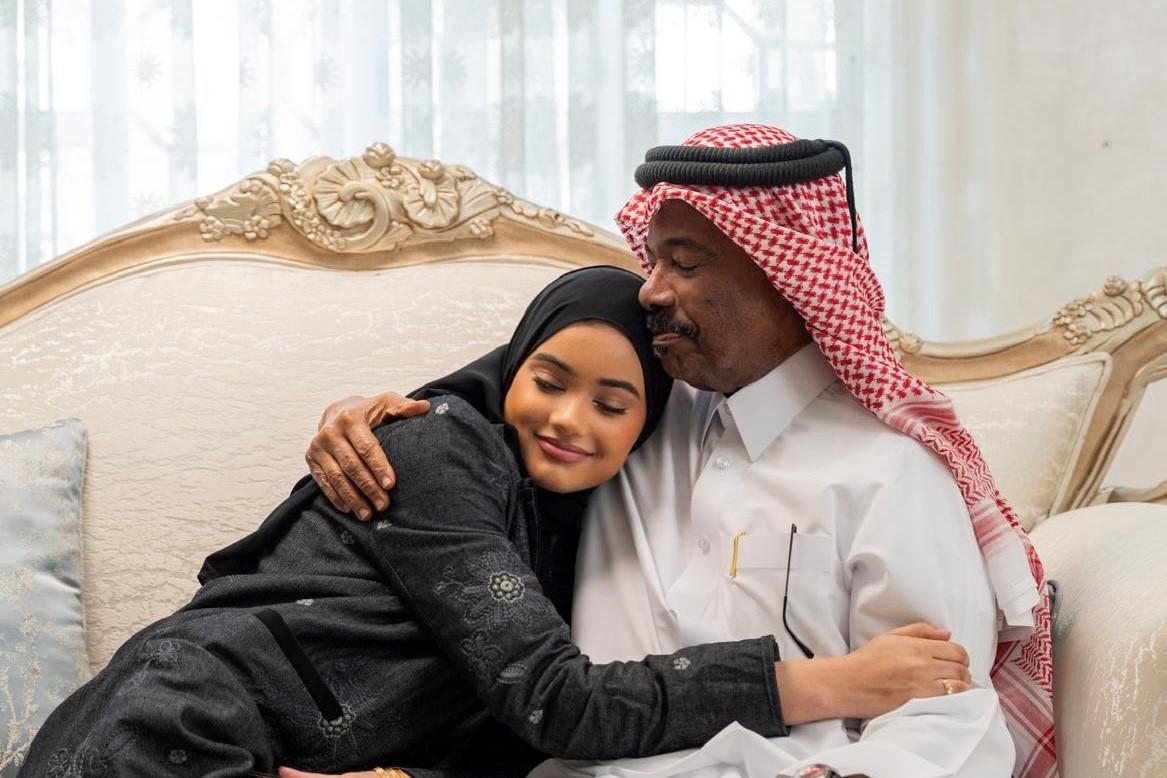
Doha, Qatar: In today’s rapidly evolving world, the importance of emotional intelligence – empathy, mindfulness, self-awareness – is becoming a necessary skill.
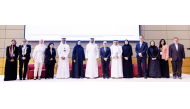
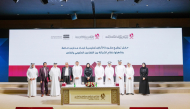
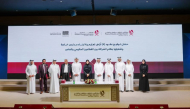
Recognizing this, Qatar Foundation’s (QF) education model places values and empathy at its core, and this is illustrated through initiatives such as its Akhlaquna Award, which celebrates the human values and integrity demonstrated by people across different communities, from young children, to students, to impactful individual efforts.
One example is Meera Al-Kaabi, a student at Qatar Technical Secondary School for Girls, who was one of three students recognized in the Akhlaquna Youth category in 2026.
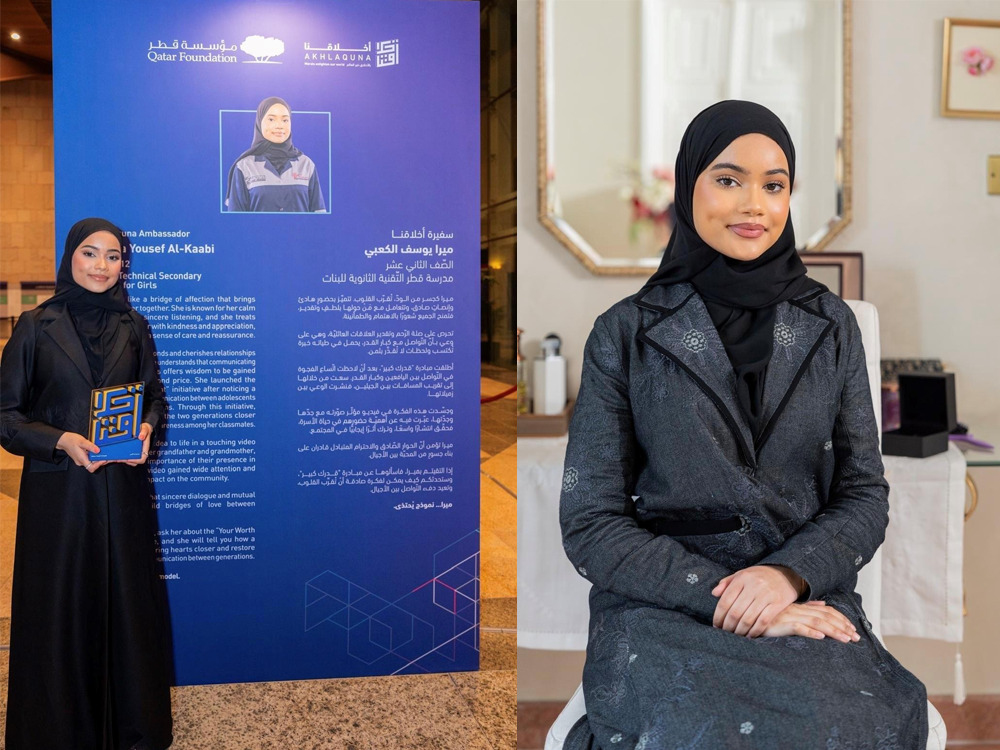
Her project, ‘Qadrak Kabeer,’ is a social awareness campaign focused on the importance of learning from the older generation’s lessons and values. Its aim is to instil values of connection and respect in the younger generations.
“The project was born out of my own love for my grandparents,” says Al-Kaabi. “I wanted to bridge that generational gap for others and show them how much they can learn from their elders.”
Al-Kaabi’s school supported her throughout this entire journey. Her project included surveying her peers’ attitudes toward their elders, which her school helped facilitate.
She also assessed the results of those surveys with the help of her school’s counsellor and conducted interviews with prominent elders in the local community, through which she gained insight into how to improve intergenerational relationships.
Al-Kaabi also worked with entities in Qatar, such as Ajial Altarbwy Center, to provide workshops to children on how best to engage with their grandparents. “The most touching moment for me was conducting exercises with children,” she says. “I asked them to write letters of gratitude to their grandparents. Most children wanted to express their love, but did not know how, and that exercise helped them greatly.”
For Al-Kaabi’s mother, the award provided a greater motivation for the project to flourish. “As a mother, it is my greatest joy that my daughter’s values are celebrated,” she said. “That is better than any other achievement.”
She says her daughter’s school provided a supportive environment for her to pursue this project. “It just goes to show the impact a school can have when they prioritize values above all else,” she says.
The Akhlaquna Award, under QF’s Pre-University Education, emphasizes the interconnectivity between knowledge, education, and strong morals, and promotes ethics as the foundation for success in life.
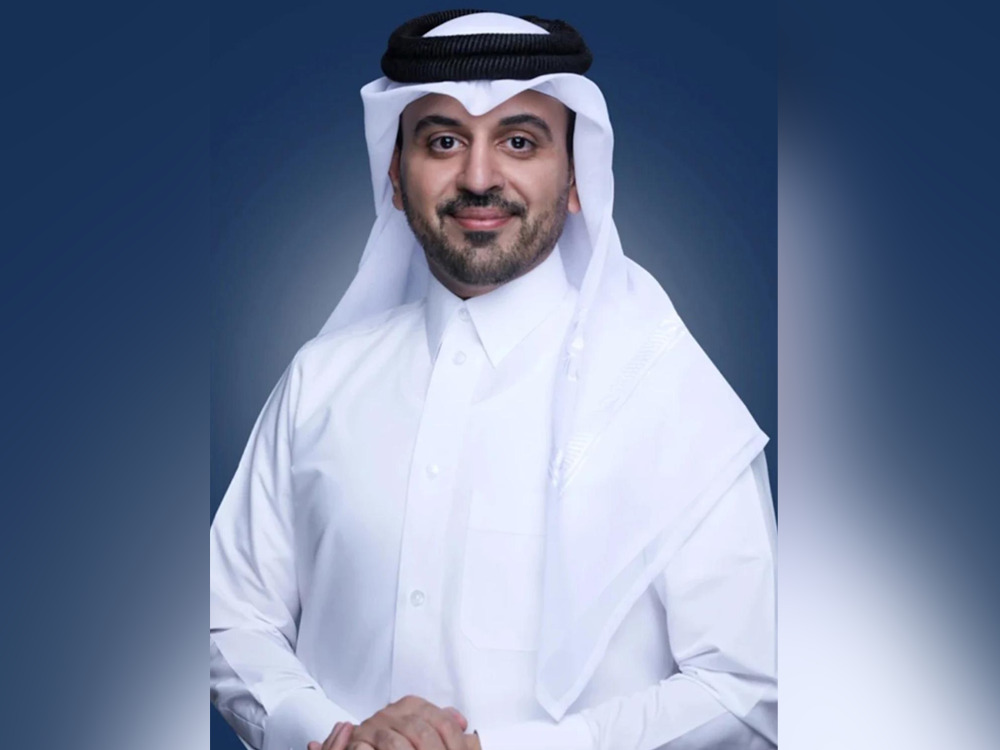
Ahmed Al-Malki, Project Manager and member of the Akhlaquna team, explains the initiative’s growing role in incorporating values in the education system. “Values-based education is essential because knowledge is incomplete without ethics,” he says. “Akhlaquna contributes to promoting noble values on an annual basis to achieve our overarching goal: embedding ethical principles within students’ character.”
Al-Malki says Akhlaquna’s influence extends beyond the present day; it is designed to have a long-term impact on students’ engagement with their communities. “The award focuses on shaping a conscious, proactive generation capable of creating a sustainable positive impact in their communities,” he says, adding that, “students become more aware of their responsibilities, more respectful of others, and better equipped to make positive decisions in various life situations.”
These values, he says, turn into proactive actions in school, and beyond. “The values they acquire are not merely theoretical concepts; they are translated into practical behavior in daily interactions. They foster a spirit of initiative and volunteerism, ultimately bolstering students’ confidence, adaptability, and success in the wider world.”
Al-Malki cites the impact of projects such as ‘Qadrak Kabeer’ as part of Akhlaquna’s role in driving change. “Recognizing value-driven projects goes beyond celebrating achievement; it creates role models within schools and the wider community,” he says.
“We have also noticed that many students actively encourage others to participate in the award, as they have become role models who inspire and leave a lasting influence on their peers, motivating them to engage in similar value-driven initiatives.”