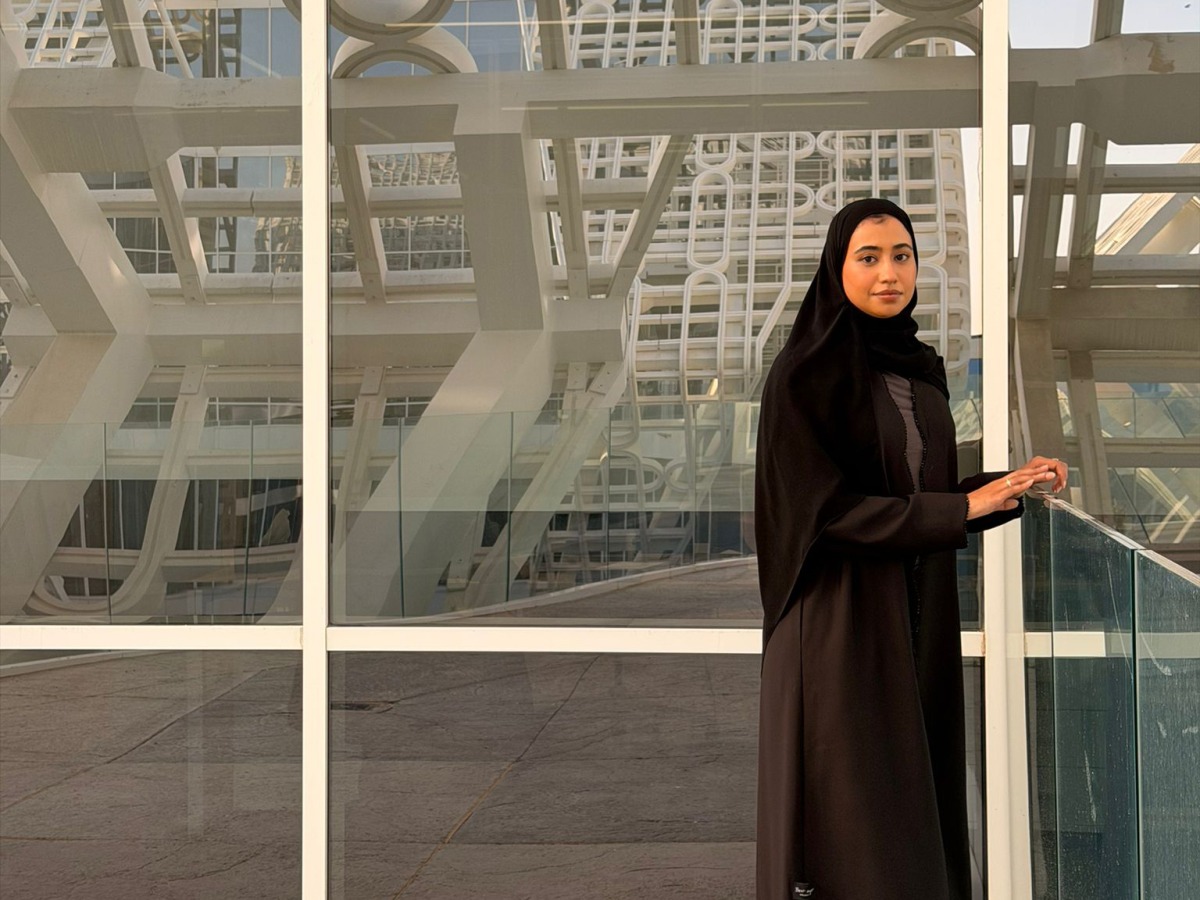
Qatari artist and designer Ghada Al Suwaidi
Doha, Qatar: Renowned Qatari artist and designer Ghada Al Suwaidi has captured the essence of her homeland on one of motorsport’s most visible canvases, the helmet of French Formula One driver Pierre Gasly for the Canadian Grand Prix. The collaboration, part of the ongoing Years of Culture initiative, marks another milestone in Qatar’s efforts to blend contemporary creativity with global sporting platforms.
In an exclusive interview with The Peninsula, Al Suwaidi described her initial reaction to the commission as a mix of excitement and profound responsibility. “A Formula One helmet is such a visible object. It moves across the world, it is seen by millions of fans, and it becomes part of a much bigger story than the race itself,” she said.
The project presented a unique opportunity to showcase Qatar not through stereotypical symbols alone, but through the vibrant, lived experience of contemporary Qatari life. Al Suwaidi drew inspiration from the colours, patterns, and everyday scenes that define her personal connection to the country. Her artistic practice, often rooted in nostalgia and familiar neighbourhood memories, found new expression on the curved, dynamic surface of a racing helmet.
“I wanted the design to reflect the Qatar I know and experience every day,” she explained. “Not only the traditional symbols people may expect, but also the colours, patterns, memories and small details that shape our visual identity.” Balancing artistic expression with the unforgiving demands of Formula One proved challenging. The helmet must command attention from a distance during high-speed races while revealing deeper meaning upon closer inspection. Al Suwaidi ensured the design conveyed movement, energy, and rhythm, qualities that mirror the precision and intensity of motorsport, without appearing heavy or static.
The design process began with deep reflection and research into Qatar’s visual culture. Translating these elements onto a compact, curved helmet required careful consideration of how the artwork would flow around its three-dimensional form and appear from multiple angles during races.
From initial sketches to final refinements, Al Suwaidi focused on maintaining authenticity to her artistic language while meeting the technical and aesthetic expectations of the Formula One world.
“The challenge was to create something that felt expressive and artistic, but also sharp enough for the speed and intensity of the sport,” she noted.
Al Suwaidi highlighted specific colours and patterns that carry personal significance, elements drawn from her broader body of work that evoke emotional connections and cultural recognition. She hopes Qatari viewers will see reflections of their own experiences in the design, while international audiences discover new dimensions of Qatar’s contemporary identity.
The artist emphasised the broader importance of such platforms for Qatari creatives. “Global platforms like Years of Culture allow Qatari artists and designers to be part of international conversations, not only as participants but as contributors with their own voices and perspectives,” she said.
These collaborations demonstrate how culture can travel unexpectedly, appearing on racetracks and reaching entirely new audiences.